
Sacred music Christian refers to music composed and performed for the purpose of worship, liturgy, and expressing devotion to God within the Christian faith. This includes everything from ancient Gregorian chants and classical hymns to contemporary worship songs and gospel music, all unified by their intent to glorify God and nurture spiritual life.
For two thousand years, Christians have lifted their voices in song, believing that music carries prayer to heights that words alone cannot reach. The Apostle Paul urged believers to speak “to one another with psalms, hymns, and songs from the Spirit” (Ephesians 5:19), recognizing that sacred music does more than fill silence during services. It teaches doctrine, strengthens community bonds, and stirs the soul toward transformation.
Today, sacred music continues to shape Christian worship across every tradition, from the soaring pipe organs of cathedral vespers to the guitar-led praise in storefront churches. But its power extends far beyond Sunday morning. Throughout history, spirituals sustained enslaved people seeking freedom, protest songs gave voice to civil rights marchers, and hymns of lament have comforted communities facing injustice. Sacred music becomes prophetic witness when it calls God’s people toward righteousness and moves hearts to act.
This article explores what sacred music is, how it functions in worship and daily life, the major forms it takes across Christian traditions, and how believers have wielded it as an instrument of justice and social transformation. Whether you sing from a hymnal or stream worship playlists, understanding sacred music’s depth will enrich your faith journey and equip you to join the ancient chorus that declares God’s glory.
What Sacred Music Means in the Christian Tradition
Sacred music in the Christian tradition is music intentionally created to worship God, express devotion, and nurture spiritual life. It encompasses everything from ancient chants whispered in candlelit sanctuaries to joyful gospel choruses that shake church rafters, all unified by a single purpose: turning hearts and voices toward the sacred.
The biblical foundation for this practice runs deep. The Psalms themselves are songs, a 150-piece hymnbook that has shaped Christian worship for millennia. The apostle Paul instructed early believers to address “one another in psalms and hymns and spiritual songs, singing and making melody to the Lord with your heart” (Ephesians 5:19). This trio of musical forms, echoed again in Colossians 3:16, shows that from the beginning, Christians understood music as essential to their communal life and personal faith. Ephesians 5:19 and sacred music reveals how singing together was meant to build unity and teach doctrine, not merely fill time.
- Sacred Music
- Music created specifically for religious worship and spiritual purposes, intended to honor God and facilitate encounter with the divine.
- Liturgical Music
- Music composed for use within formal worship services, following established patterns of prayer and celebration throughout the church year.
- Hymn
- A metrical song of praise to God, typically sung congregationally, often teaching theological truths through verse and melody.
- Spiritual Song
- A spontaneous or informal expression of worship, ranging from personal devotional melodies to Spirit-inspired sung prayers.
- Worship Music
- Contemporary term for music used in Christian gatherings to facilitate corporate praise, prayer, and response to God’s presence.
- Prophetic Song
- Music that speaks God’s heart for justice, calls believers to action, or proclaims truth to power in times of crisis.
Sacred music serves multiple purposes in Christian life. It glorifies God, giving voice to praise that words alone cannot carry. It builds community, creating unity as diverse voices blend into one song. It teaches truth, embedding scripture and doctrine in memorable melodies that shape belief. And it expresses the full range of human emotion before God, from lament to exultation, doubt to trust. Whether sung in a cathedral or a house church, in times of celebration or struggle, sacred music remains a primary way Christians encounter the holy and respond to grace.
How Sacred Music Functions in Worship and Beyond
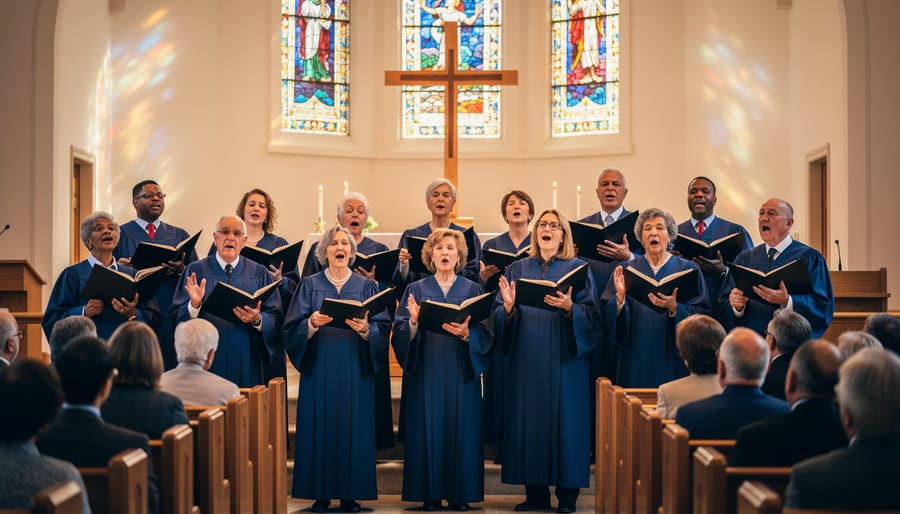
Sacred music works in Christian life through multiple channels at once. When a congregation sings “Amazing Grace” or a solitary believer hums “It Is Well With My Soul” during a difficult morning, something more than aesthetic pleasure happens. The music becomes a vehicle for the Holy Spirit, carrying theology into hearts and minds in ways that spoken words alone cannot reach.
At its core, sacred music transforms abstract doctrine into felt experience. A hymn like “Holy, Holy, Holy” teaches the doctrine of the Trinity while simultaneously inviting worshippers into awe before God’s majesty. The melody embeds the truth in memory, so believers carry these truths with them long after the service ends. This is why many Christians can recall hymn lyrics learned in childhood decades later, even when other lessons have faded.
The mechanics of sacred music in Christian practice serve several interconnected purposes:
- Worship offering, lifting praise and adoration to God through melody and words
- Scripture meditation, turning biblical texts into songs that dwell in the heart
- Community unity, joining diverse voices into one body through shared song
- Teaching tool, conveying theology and biblical truth in memorable form
- Emotional healing, giving voice to grief, joy, lament, and hope
- Prophetic voice, declaring God’s justice and calling the church to action
In liturgical settings, music structures the rhythm of worship. Responsive psalms, doxologies, and sung prayers guide congregations through confession, thanksgiving, and intercession. The music provides a framework that holds the community together, especially during seasons of change or loss when spoken words feel inadequate.
Beyond Sunday gatherings, sacred music extends into daily life. A parent teaching their child “Jesus Loves Me” passes down faith through song. Missionaries have long used indigenous melodies to share the gospel in culturally resonant ways. Prayer meetings gain momentum when participants sing their petitions. Believers facing trials often find that worship songs become prayers when their own words run dry.
Sacred music also shapes how Christians understand God’s character. Songs about God’s faithfulness during exile, His nearness to the brokenhearted, or His passion for justice form our theology as much as sermons do. The music doesn’t just describe what we believe, it forms who we become as followers of Christ.
Forms and Expressions of Christian Sacred Music
Traditional and Liturgical Music
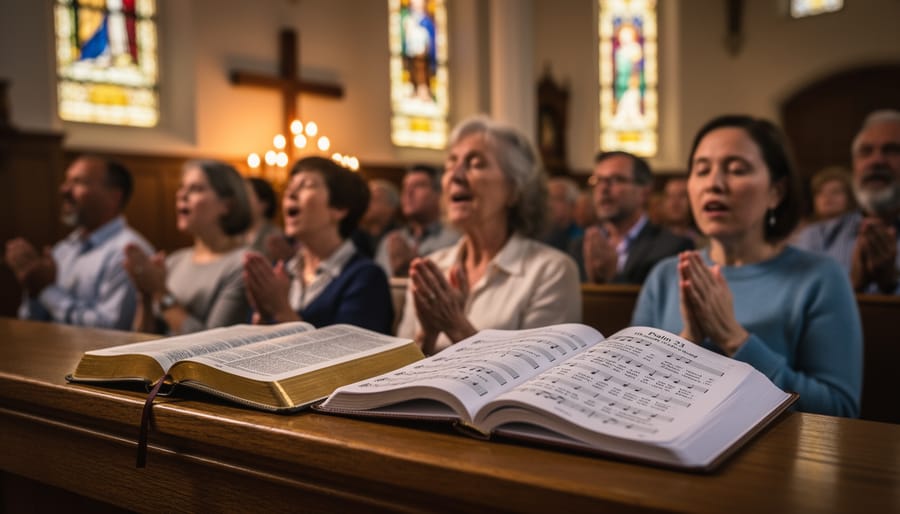
Traditional liturgical music represents Christianity’s oldest unbroken musical tradition, stretching back to the earliest church communities. History of Gregorian chant reveals how these monastic melodies developed into a sophisticated system of worship that shaped Western sacred music for centuries. Plainchant, hymns rooted in the Psalms, and classical Mass settings from composers like Bach and Mozart gave congregations a shared musical language that transcended individual preference.
These forms were designed for communal worship, not performance. When a congregation sings together through the liturgy, whether chanting the Kyrie or lifting voices in “A Mighty Fortress Is Our God,” the music itself becomes a prayer. The steady rhythm and repetitive structure help believers focus their hearts on God rather than on artistic display. Many traditional hymns carry deep theological truths in their verses, teaching doctrine through melody in ways that stick with us long after the sermon fades. This music still anchors worship in liturgical churches today, connecting contemporary believers to centuries of faithful witness.
Contemporary and Global Worship
Contemporary Christian worship has exploded into a kaleidoscope of styles that reflect the global church. Modern worship songs, often guitar-driven, with simple melodies and repetitive choruses, dominate many evangelical and charismatic congregations, designed for congregational participation rather than performance. Artists like Hillsong, Bethel Music, and Elevation Worship have shaped this genre, though local churches worldwide create their own expressions.
Gospel music, rooted in African American church tradition, brings soul, jazz, and blues influences into sacred space. From traditional quartet singing to contemporary gospel artists, this genre carries theological depth wrapped in emotional power and communal joy.
Perhaps most significant is the rise of indigenous worship expressions. Christians in Africa incorporate drums and call-and-response patterns. Latin American believers blend folk instruments with hymns. Asian churches integrate traditional melodies and instruments into their praise. These aren’t merely cultural adaptations, they’re authentic expressions of worship that honor how different peoples encounter God, enriching the whole body of Christ with diverse musical languages of faith.
Justice-Oriented Sacred Music
Throughout Christian history, certain sacred songs have done more than worship, they’ve cried out for freedom, dignity, and God’s justice on earth. Spirituals emerged from the brutal reality of American slavery, carrying double meanings of heavenly hope and earthly liberation. “Go Down Moses” wasn’t just about ancient Egypt; it was a call for present-day deliverance. “Wade in the Water” encoded escape instructions while praising God’s protective presence.
Protest hymns like “We Shall Overcome” and “Ain’t Gonna Let Nobody Turn Me Around” sustained the Civil Rights Movement, transforming churches into staging grounds for nonviolent resistance. These weren’t entertainment, they were weapons of hope, building courage when clubs and firehoses threatened to break spirits.
Liberation theology gave birth to new sacred music across Latin America, Africa, and Asia, where Christians sang their longing for economic justice and human dignity. Today’s prophetic musicians continue this tradition, writing worship songs that lament systemic racism, environmental destruction, and poverty while declaring God’s heart for the oppressed.
This music unsettles comfortable faith. It reminds us that worship of a just God demands justice work, and that our songs should sometimes make the powerful uncomfortable while comforting those who suffer.
Sacred Music as a Voice for Justice and Change
Biblical Foundations for Justice Through Song
The Bible shows us that singing about justice isn’t a modern invention, it’s woven into Scripture itself. When Miriam led the Israelite women in song after crossing the Red Sea (Exodus 15), she celebrated God’s deliverance of the oppressed from their oppressors. Her tambourine and lyrics proclaimed liberation as an act of divine justice.
Hannah’s prayer in 1 Samuel 2 reads like a revolutionary anthem: “He raises the poor from the dust and lifts the needy from the ash heap.” Centuries later, Mary echoed these themes in the Magnificat (Luke 1:46-55), singing that God “has brought down rulers from their thrones but has lifted up the humble.” Both women used song to declare God’s heart for justice and his pattern of reversing earthly power structures.
The Psalms overflow with calls for justice, Psalm 82 demands defense of the weak and fatherless, while Psalm 146 praises God who “upholds the cause of the oppressed.” These weren’t just prayers but songs meant to be sung corporately, teaching communities that worship and justice advocacy belong together.
Historical Examples of Sacred Music in Justice Movements
Throughout history, Christian sacred music has been a mighty force in movements that pursued God’s vision of justice and liberation. During the abolitionist movement, enslaved Africans and their allies sang spirituals like “Go Down Moses” and “Swing Low, Sweet Chariot”, songs that simultaneously expressed faith in God’s deliverance and encoded messages about escape routes on the Underground Railroad. These hymns sustained hope when circumstances seemed hopeless.
The Civil Rights Movement of the 1950s and 60s demonstrated sacred music’s power to unify and embolden. Singing that sustained the movement included “We Shall Overcome,” adapted from the gospel hymn “I’ll Overcome Someday,” which became an anthem of resilience. Protesters sang “Ain’t Gonna Let Nobody Turn Me Around” and “This Little Light of Mine” during sit-ins and marches, transforming fear into courage and isolation into community.
In South Africa, Christians fighting apartheid lifted voices in “Nkosi Sikelel’ iAfrika” (God Bless Africa) and freedom songs that merged indigenous melodies with biblical themes of exodus and promised land. These weren’t merely background music, they were acts of resistance, declarations of human dignity, and prayers for deliverance sung in the face of violent oppression. Each movement revealed that when God’s people sing together, they remember who they are, whose they are, and what they’re called to do.
Sacred Music in Today’s Justice Work
Today’s worship leaders and songwriters are creating sacred music that addresses urgent justice issues facing our world. Contemporary worship songs now explore themes of biblical social justice with increasing directness and theological depth.
Churches sing songs that lament racial injustice and call believers to heal racial divides through Christ’s reconciling love. Artists like Propaganda, Propaganda & Odd Thomas, and worship collectives such as The Porter’s Gate have released albums specifically focused on justice, poverty, and the marginalized. Environmental hymns invite congregations to care for creation as an act of worship and obedience.
Global worship music from refugee communities, persecuted churches, and the Global South brings fresh voices to Western congregations, expanding our vision of God’s kingdom. Songs addressing economic inequality, human trafficking, and dignity for the unborn appear in worship sets alongside traditional praise anthems. This sacred music doesn’t merely comment on issues, it forms hearts, teaches theology, and moves believers from passive agreement to active participation in God’s restorative work.
Engaging with Sacred Music in Your Faith Journey
You don’t need to become a choir director or theology professor to let sacred music shape your faith. Start by listening more intentionally to the songs you already sing in worship, asking yourself what truths they teach about God’s character and call on your life. Many hymns and spirituals carry powerful stories of faith under trial, learning the background of songs like “We Shall Overcome” or “Lift Every Voice and Sing” reveals how believers have sung their way through slavery, segregation, and struggle, which can inform your own journey toward true racial healing and justice.
Here are practical ways to engage sacred music in your personal and communal faith:
- Learn historic hymns with justice themes and the stories of those who first sang them
- Explore global worship music from African, Asian, Latin American, and indigenous Christian communities
- Attend multicultural or ecumenical worship services to experience different musical traditions
- Support contemporary musicians and worship leaders who address justice issues in their work
- Use music intentionally in your prayer time, especially when interceding for the oppressed and marginalized
Consider creating playlists for different aspects of your faith journey, songs that help you lament injustice, celebrate God’s faithfulness, or prepare your heart for service. Invite your small group or Bible study to share meaningful sacred music from their own backgrounds, then discuss how these songs speak to current needs in your community. When you participate in worship, whether singing along in church or humming a hymn while doing dishes, you’re joining a centuries-long chorus of believers who’ve used music to remember God’s promises and renew their commitment to love and justice.

Common Questions About Sacred Christian Music
Music shapes our worship in profound ways, yet many Christians wonder about the boundaries and possibilities of what makes music truly sacred. These questions arise naturally as we seek to honor God authentically while embracing the diverse musical expressions within our faith tradition.
What actually makes music “sacred”?
Music becomes sacred through its purpose and intention, when it’s offered to God in worship, carries theological truth, or directs hearts toward divine encounter. The musical style itself doesn’t determine sacredness; rather, it’s the dedication of the music to God’s glory and the spiritual work it accomplishes in forming faith.
Can contemporary or secular-sounding music be considered sacred?
Yes, when music serves worship and expresses genuine faith, its contemporary sound doesn’t disqualify it from being sacred. Throughout church history, sacred composers have drawn from the musical language of their time, what sounded “secular” to one generation often became treasured sacred music to the next.
How do I choose appropriate sacred music for my church or personal worship?
Look for music with solid biblical content, theological depth, and language that invites genuine encounter with God. Consider your community’s needs, cultural context, and how the music serves your worship goals, whether teaching doctrine, expressing lament, celebrating joy, or calling for justice.
What’s the difference between worship music and sacred music?
The terms overlap significantly, though “sacred music” is broader, encompassing all music created for religious purposes across Christian history and traditions. “Worship music” typically refers to congregational songs used in services, while sacred music includes everything from medieval chants to concert spirituals to personal devotional songs.
How can sacred music address justice issues without creating division in the church?
Justice-oriented sacred music works best when it’s grounded in Scripture, sung with pastoral sensitivity, and introduced with context about its biblical and historical roots. When we frame justice songs as part of our call to love neighbors and seek God’s kingdom, they unite rather than divide, reminding us that loving God and pursuing justice aren’t separate commitments but interwoven expressions of Christian faithfulness.
These questions reflect the real tensions Christians navigate as we seek music that honors both our rich tradition and our present moment. There’s no single right answer for every community, but wrestling with these questions together helps us grow in discernment. The goal isn’t finding perfect consensus on every musical choice, but cultivating hearts that genuinely seek to honor God through song while remaining open to how the Spirit speaks through diverse musical expressions across the global church.
Sacred music stands as one of the church’s most enduring gifts, a means of grace that opens our hearts to worship God while simultaneously drawing us closer to one another and to the needs of the world. Throughout this exploration, we’ve seen how Christian sacred music functions on two inseparable planes: it lifts our voices in praise to the Creator, and it compels us outward in love and service to our neighbors.
When we sing the Psalms, traditional hymns, contemporary worship songs, or justice-oriented spirituals, we’re participating in something far greater than performance or entertainment. We’re joining a centuries-old conversation between heaven and earth, adding our voices to the faithful who’ve come before us and those who’ll follow after. These songs teach us theology, sustain us through trials, celebrate God’s faithfulness, and remind us that our faith cannot be separated from our concern for the vulnerable and oppressed.
The beauty of sacred music is that it meets us exactly where we are. Whether you’re drawn to quiet contemplation with ancient chants, energized by gospel music’s joyful proclamation, or moved by protest hymns that call for justice, God can use these varied expressions to shape your faith and direct your steps.
As you move forward, let sacred music become a regular companion in your spiritual journey. Explore traditions beyond your own. Learn the stories behind the songs. Sing with intention. Let the melodies and lyrics you carry in your heart inspire not just worship on Sunday, but compassionate action throughout the week.