
The Bible does not command or prohibit the celebration of most holidays. Instead, Scripture provides principles about freedom, conscience, and worship that allow Christians to make informed decisions about which celebrations to observe and how to approach them in a way that honors God.
This matters because many believers wrestle with questions about Christmas, Easter, Halloween, and secular holidays, wondering if participation conflicts with their faith. Some face pressure from family members who hold different convictions. Others encounter teachings that certain celebrations are forbidden or required, leaving them confused about where Scripture actually draws the line.
The truth is that what the Bible says about holidays centers on heart posture rather than calendar dates. The early church grappled with similar tensions over Jewish feast days and Gentile festivals. The apostle Paul addressed these disputes directly, establishing principles that still guide us today.
Throughout this article, you’ll discover what Scripture explicitly teaches about holiday observance, how biblical principles apply to modern celebrations, and why sincere Christians arrive at different conclusions on this topic. We’ll explore the framework Scripture provides for making wise decisions, examine specific holidays through a biblical lens, and address common questions that believers face.
Whether you’re defending your choice to celebrate certain holidays, questioning traditions you’ve always followed, or simply seeking to honor God in your yearly rhythms, understanding Scripture’s teaching brings clarity and confidence. The goal isn’t to impose uniformity but to equip you with biblical wisdom for navigating these decisions within your own faith community and family.
What the Bible Actually Says About Holidays
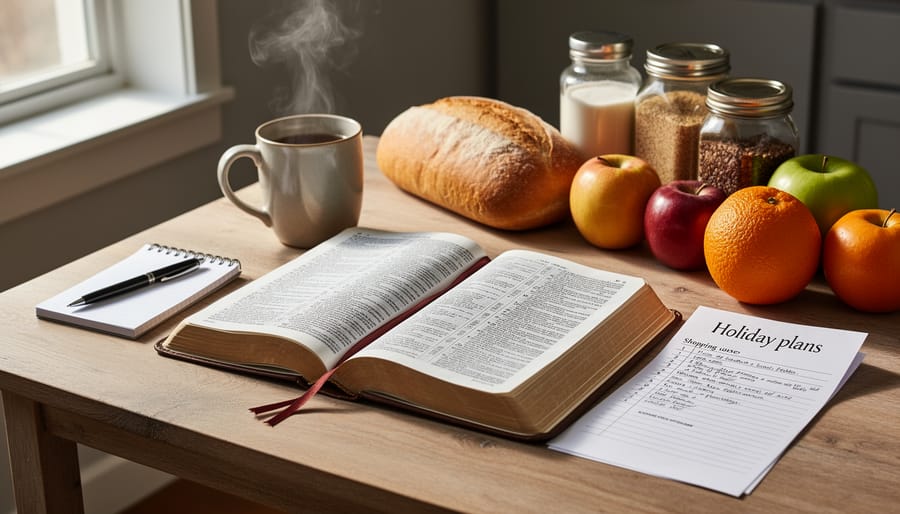
Old Testament Festivals and Holy Days
God established specific times of celebration for His people Israel, commanding them to observe seven annual feasts that would shape their identity and point toward His redemptive plan. These biblical holidays detailed in Leviticus 23, were not arbitrary traditions but divinely appointed gatherings with profound spiritual significance.
The spring feasts began with Passover (Pesach), commemorating Israel’s deliverance from Egyptian slavery when the Lord passed over homes marked with lamb’s blood (Exodus 12:1-14). Immediately following came the Feast of Unleavened Bread, a seven-day observance of eating bread without yeast, symbolizing separation from sin and the haste of the Exodus (Leviticus 23:6-8). During this week fell the Feast of Firstfruits, when Israel offered the first sheaf of the barley harvest to the Lord, acknowledging His provision (Leviticus 23:9-14).
Fifty days after Firstfruits, God commanded the Feast of Weeks, also called Pentecost, celebrating the wheat harvest and later commemorating the giving of the Law at Sinai (Leviticus 23:15-21).
The fall feasts carried a more solemn tone. The Feast of Trumpets marked the beginning of the civil new year with trumpet blasts calling Israel to remembrance and preparation (Leviticus 23:23-25). Ten days later came the Day of Atonement (Yom Kippur), the most sacred day when the high priest entered the Holy of Holies to make atonement for the nation’s sins (Leviticus 16:29-34). The festival cycle concluded with the Feast of Tabernacles (Sukkot), a joyful seven-day celebration where families lived in temporary shelters, remembering God’s faithfulness during their wilderness journey (Leviticus 23:33-43).
Each feast revealed aspects of God’s character and foreshadowed the coming Messiah.
New Testament Perspectives on Celebration
The New Testament marks a fundamental shift in how God’s people relate to special days and celebrations. When Jesus fulfilled the Old Testament law, He didn’t leave detailed instructions about which holidays to observe or avoid. Instead, He and the apostles established principles that guide believers in matters of celebration.
Jesus Himself participated in Jewish festivals throughout His earthly ministry. The Gospels record Him attending Passover, the Feast of Tabernacles, and Dedication (Hanukkah). Yet He never commanded His followers to continue these observances after His death and resurrection.
The apostle Paul addressed holiday observance directly in several letters. In Romans 14:5-6, he writes, “One person esteems one day as better than another, while another esteems all days alike. Each one should be fully convinced in his own mind. The one who observes the day, observes it in honor of the Lord.” This passage establishes that Christians have freedom regarding special days, as long as their motive is to honor God.
Paul went further in Colossians 2:16-17, warning believers not to let anyone judge them “with regard to a festival or a new moon or a Sabbath. These are a shadow of the things to come, but the substance belongs to Christ.” The Old Testament celebrations pointed forward to Christ; now that He has come, the shadows have fulfilled their purpose.
In Galatians 4:9-11, Paul expressed concern when believers treated certain days as spiritually mandatory, calling it a return to bondage. The heart of New Testament teaching is clear: celebrations are permissible when done freely to honor Christ, but they become problematic when treated as requirements for salvation or spiritual standing.
How Biblical Principles Apply to Modern Holidays

The Principle of Christian Liberty
Romans 14:5-6 gives us one of Scripture’s clearest statements on Christian freedom: “One person esteems one day above another; another esteems every day alike. Let each be fully convinced in his own mind. He who observes the day, observes it to the Lord; and he who does not observe the day, to the Lord he does not observe it.”
Paul wasn’t just talking about Old Testament Sabbaths. He was establishing a principle that extends to all non-essential matters of faith, including how we approach holidays. When celebrations don’t violate clear biblical commands, believers have genuine freedom to choose whether and how to observe them. The key phrase is “fully convinced in his own mind.” God calls each Christian to thoughtful conviction, not blind conformity to either cultural pressure or religious tradition.
This liberty comes with responsibility. Paul warns in Romans 14:13-15 not to put a stumbling block before another believer. If your freedom to celebrate causes a brother or sister with different convictions to violate their conscience, love requires restraint. It’s not about surrendering your freedom, it’s about prioritizing relationships and spiritual growth over personal preference.
Christian liberty in the rhythm of faith means holding your convictions with confidence while extending grace to those who celebrate differently. Neither the observer nor the non-observer should judge the other, because both answer to the same Lord who judges hearts, not calendars.
The Call to Avoid Pagan Practices
Scripture draws a clear line when celebration shifts from cultural participation to spiritual compromise. Paul warns believers not to be “yoked together with unbelievers” or to participate in idolatry (2 Corinthians 6:14-18). In 1 Corinthians 10:20-21, he’s even more direct: “I do not want you to be participants with demons. You cannot drink the cup of the Lord and the cup of demons too.”
The question is practical: what crosses this line? The Bible condemns actual worship of false gods, participation in rituals that honor other deities, and practices that invoke spiritual powers apart from God. Simply being present where unbelievers celebrate doesn’t equal partnership with darkness. The dividing line is participation in the spiritual aspect itself.
Context matters enormously. Eating turkey on Thanksgiving carries no pagan spiritual weight, even if historians trace the holiday to harvest festivals. But lighting candles as an offering to a goddess, attending a ceremony that invokes other spirits, or adopting practices designed to channel occult power would violate these passages.
Christians must examine not just a holiday’s distant origins, but what they’re actually doing and why. If an activity requires you to acknowledge, honor, or call upon anything besides the one true God, Scripture says stop.
The Commandment to Do Everything for God’s Glory
At the heart of all biblical guidance on celebrations stands a clear, encompassing principle: “Whether you eat or drink or whatever you do, do it all for the glory of God” (1 Corinthians 10:31). This command transforms holiday discussions from rule-following exercises into heart examinations.
When Paul wrote these words, he wasn’t creating a list of approved activities. He established a filter through which every choice passes. The question shifts from “Is this holiday allowed?” to “Does my celebration bring honor to God?” Your motives matter more than your calendar.
Glorifying God through holidays means checking your heart posture. Are you grateful for His blessings, or merely indulging yourself? Does your celebration point others toward Christ, or distract from Him? Are you strengthening relationships and building faith, or chasing empty traditions?
This principle frees you from legalism while guarding against license. A Christmas celebration focused on worshiping Jesus and serving others honors God. The same holiday spent in materialism and excess doesn’t. Easter centered on resurrection truth glorifies Him. Easter as nothing more than cultural tradition misses the mark.
God sees your heart. Let that reality guide every celebration you choose.
Different Types of Christian Holiday Approaches
Redeeming Holidays for Christ
Many Christians embrace widely-observed holidays like Christmas and Easter by intentionally redirecting the focus toward Christ and biblical truth. This approach recognizes that while certain celebrations may have complex historical origins, believers can transform them into meaningful opportunities for worship and spiritual growth.
The redemptive approach means stripping away cultural excesses and centering activities on Scripture. For Christmas, families might emphasize the incarnation through daily Advent readings about Jesus’s birth, singing hymns that proclaim theological truths, and giving gifts that reflect God’s generosity. Easter becomes a powerful time to study the resurrection accounts, reflect on Christ’s sacrifice through communion, and celebrate victory over sin and death.
This perspective draws from Paul’s teaching that believers can participate in activities “as unto the Lord” when their hearts are aligned with God’s glory. The key distinction lies in motive and content. Rather than passively adopting secular traditions, Christians actively shape celebrations around biblical narratives, using cultural moments as platforms to teach children about faith, invite neighbors into gospel conversations, and corporately worship with fellow believers who share this conviction.
Creating New Bible-Inspired Celebrations
Some Christians choose to celebrate only biblically commanded observances or establish fresh traditions rooted directly in Scripture. This approach prioritizes celebrations with clear biblical precedent, such as the major festivals outlined in Leviticus 23 or commemorations tied to Jesus’s life and ministry.
Believers in this category might observe Passover with a Christian understanding, seeing Christ as the ultimate Passover Lamb (1 Corinthians 5:7). Others create family traditions around baptism anniversaries, spiritual birthdays marking conversion, or weekly Sabbath meals focused on rest and worship. Some churches establish annual Scripture memory celebrations or mission sending ceremonies that mirror biblical commissioning practices.
This pattern follows the early church’s example of establishing meaningful observances, like the Lord’s Supper, that directly connect to Christ’s redemptive work. These believers find freedom in crafting celebrations that teach biblical truth without cultural ambiguity, making each commemoration an intentional act of discipleship and worship centered on God’s Word.
Choosing Not to Observe Certain Holidays
Some Christians, after studying Scripture and considering historical backgrounds, choose not to observe certain holidays as an act of worship and conscience before God. Romans 14:5 affirms this liberty: “One person esteems one day above another; another esteems every day alike. Let each be fully convinced in his own mind.”
Reasons for abstaining vary. Some believers avoid holidays with documented pagan origins, viewing participation as incompatible with 2 Corinthians 6:17’s call to “come out from among them and be separate.” Others find that commercial aspects overshadow any spiritual value, creating distraction rather than devotion.
Still others abstain simply because they see no biblical command requiring these observances. They worship God consistently throughout the year without setting aside specific cultural days, finding freedom in this approach.
Paul’s instruction in Romans 14:3 applies here: “Let not him who eats despise him who does not eat, and let not him who does not eat judge him who eats.” The decision to abstain deserves the same respect as the decision to celebrate, provided each person acts from sincere faith and biblical conviction rather than legalism or judgment toward others.
How Christians Use Holidays to Honor God
Making Christ Central in Seasonal Celebrations
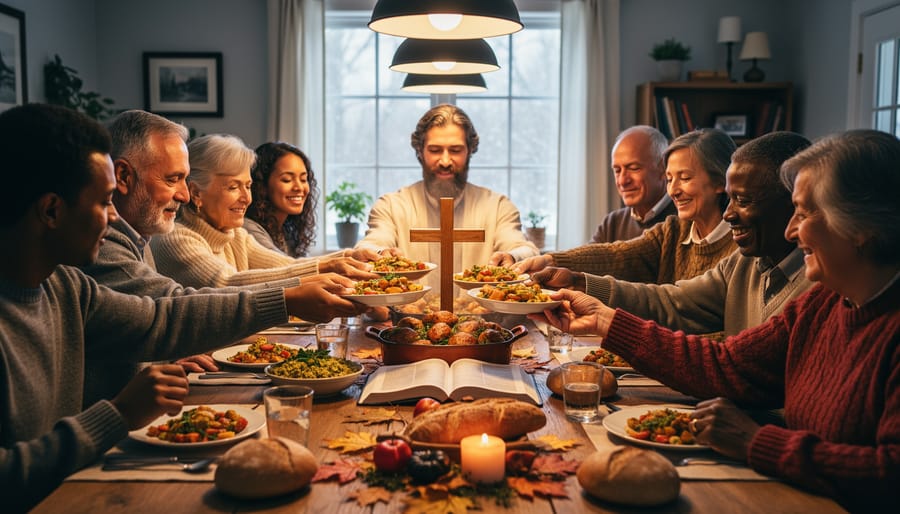
Many Christians keep Jesus at the center of seasonal celebrations by starting each holiday morning with Scripture reading that tells the real story. On Christmas, families read Luke 2 together before opening any gifts, and on Easter, they read the resurrection accounts from the Gospels before breakfast. These simple practices anchor the day in biblical truth rather than commercial activity.
Worship becomes the foundation through singing hymns, playing Christian music throughout the day, or attending special church services. Some families create Advent readings that count down to Christmas by exploring prophecies about Christ’s coming, while others observe Holy Week with daily reflections on Jesus’s final days.
Faith-shaped traditions might include serving communion together on Resurrection Sunday, lighting candles while discussing Jesus as the Light of the World, or replacing secular decorations with symbols that point to biblical truth, nativity scenes, crosses, and Scripture verses displayed prominently.
The key is intentionality. When families discuss why they celebrate and connect each element back to Christ, holidays become opportunities for discipleship rather than mere cultural participation. Even meal prayers can highlight the specific biblical event being commemorated.
Using Holidays as Evangelism Opportunities
Holidays create natural entry points for spiritual conversations that might feel awkward at other times. When neighbors ask about your Thanksgiving plans or Christmas traditions, you have permission to mention what you’re grateful for spiritually or how your family remembers Christ’s birth. These moments cost nothing but offer genuine connection.
Many Christians host holiday gatherings specifically to include non-believing friends. A casual invitation to an Easter brunch or Christmas cookie exchange becomes an organic setting where faith surfaces naturally through prayers before meals, conversations about biblical meaning, or simple joy that reflects Christ. The key is authenticity, not forcing a presentation, but living out your faith visibly.
Some believers use holiday volunteer opportunities as team efforts, inviting coworkers or neighbors to serve alongside them at food banks or shelters during Thanksgiving. Working side-by-side opens doors for explaining why serving others matters in your faith. Cultural holidays already spark curiosity about spiritual things. Christians simply need to be ready to give an honest answer when someone asks why you celebrate the way you do.
Serving and Giving During Holiday Seasons
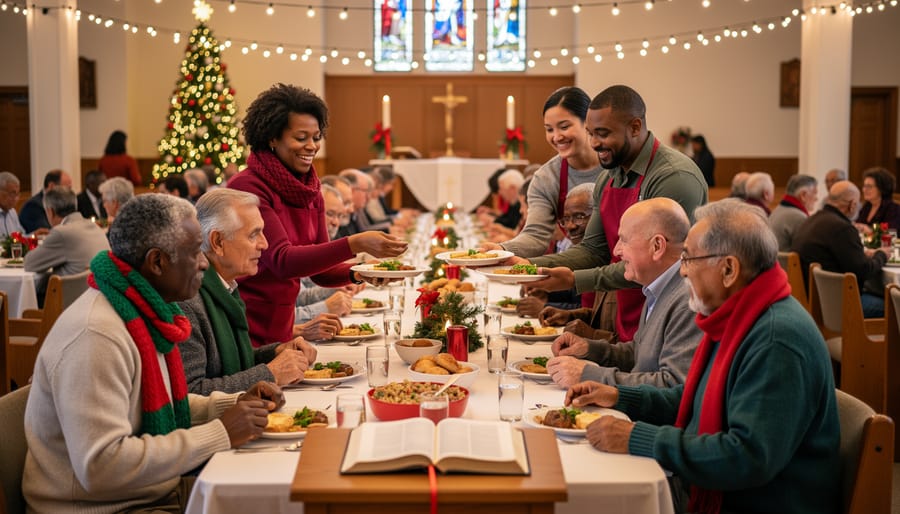
The Bible repeatedly connects celebration with generosity. When God established feast days in the Old Testament, He commanded His people to include “the foreigner, the fatherless and the widow” in their rejoicing (Deuteronomy 16:11-14). This wasn’t charity separated from celebration, it was essential to honoring God during festivals.
Jesus modeled this by meeting people’s needs during celebrations, like feeding the five thousand during Passover season. The early church similarly combined celebration with caring for the poor, ensuring “there were no needy persons among them” (Acts 4:34).
Holiday seasons provide natural opportunities to embody biblical hospitality. Many believers open their homes to those without family, prepare meals for struggling neighbors, or volunteer at shelters. Others use gift-giving occasions to support missionaries or meet tangible needs rather than exchanging unnecessary items.
These actions reflect God’s heart: “Religion that God our Father accepts as pure and faultless is this: to look after orphans and widows in their distress” (James 1:27). When celebration prompts generosity, it becomes worship.
Navigating Holiday Questions with Biblical Wisdom
Making holiday decisions isn’t always straightforward, especially when family traditions, church practices, and personal convictions don’t align. The good news is that Scripture provides wisdom for working through these questions, even when it doesn’t give explicit commands about every modern celebration.
The key to biblical discernment is asking the right questions: Does this practice draw me closer to God or pull me toward idolatry? Will my participation cause a weaker believer to stumble? Am I acting from faith or from fear of what others think? Can I honestly do this to glorify God? These questions, rooted in passages like Romans 14, 1 Corinthians 8-10, and Colossians 2, help you move from confusion to clarity.
Can Christians celebrate Halloween?
Christians hold different convictions about Halloween. Some avoid it due to its historical pagan connections, while others participate in harvest festivals or treat it as a cultural event focused on community and fun without embracing occult elements. The decision rests on personal conscience before God.
What about Christmas trees and other holiday decorations?
The Bible doesn’t specifically address Christmas trees. While Jeremiah 10:2-4 warns against idolatry, most scholars agree it’s talking about carved wooden idols, not family decorations. If a tree helps your family celebrate Christ’s birth without becoming an idol, there’s freedom to enjoy it.
Should Christians observe Jewish holidays like Passover?
Some believers find deep meaning in celebrating biblical feasts to understand Jesus better, while others see them as fulfilled in Christ. Galatians 4:9-11 and Colossians 2:16-17 affirm freedom in this area, whether you observe them or not.
How do I respect others’ holiday convictions that differ from mine?
Romans 14:1-13 teaches us to welcome those with different convictions without quarreling. Don’t judge those who celebrate differently, don’t pressure others to adopt your practices, and prioritize unity in Christ over winning holiday debates.
When you face a holiday decision, take it to prayer and search Scripture. Consider your motives honestly. Seek counsel from mature believers who know you well. And remember that God cares more about your heart than your calendar.
The Bible doesn’t give us a detailed calendar of required holidays for Christians to follow. Instead, Scripture offers something better: principles that free us to celebrate in ways that honor God while respecting the convictions of fellow believers.
What we’ve discovered is that biblical freedom comes with responsibility. You’re free to observe holidays or set them aside, as long as your choices flow from faith and aim to glorify Christ. Romans 14:5-6 makes this clear, whether you esteem one day above another or consider all days alike, what matters is doing so “to the Lord.” Your heart posture matters more than your calendar.
This freedom isn’t permission to be careless. We’re called to avoid genuine pagan practices, to build up rather than tear down the faith of others, and to make Christ central in whatever we choose to celebrate. When you’re unsure whether a particular holiday or tradition aligns with Scripture, ask yourself: Does this honor God? Does it strengthen my walk with Jesus? Does it reflect love for my neighbor?
The beauty of biblical celebration is that it leaves room for both joyful participation and conscientious abstention. Some believers will embrace widely-observed holidays by filling them with Christian meaning. Others will focus exclusively on biblical commemorations. Both approaches can honor God when grounded in Scripture and motivated by love.
Whatever you decide about holidays, let wisdom and grace guide you. Celebrate with intention, grounding your choices in God’s Word rather than cultural pressure or personal preference alone.