
Volunteer interfaith caregivers are trained community members who provide free, non-medical support to neighbors in need, regardless of religious background, through organized programs that unite people of different faiths in practical service. These volunteers offer help with transportation to medical appointments, grocery shopping, friendly visits, light housework, and other daily tasks that help elderly, disabled, or isolated individuals maintain independence and dignity. The interfaith dimension means Christians work alongside Muslims, Jews, Buddhists, and others, united not by shared doctrine but by a common commitment to love and care for neighbors.
For Christians considering this calling, the question isn’t whether we can participate but how our faith informs it. Scripture gives us clear direction: “Religion that God our Father accepts as pure and faultless is this: to look after orphans and widows in their distress” (James 1:27). Jesus himself modeled radical care for those outside his immediate community, from healing the Roman centurion’s servant to praising the Good Samaritan who crossed ethnic and religious lines to help a stranger.
When we serve across faith lines we don’t dilute our witness. We embody it. Interfaith caregiving programs operate with clear boundaries, volunteers respect each recipient’s beliefs, and Christians have opportunities to demonstrate Christ’s love through tangible action. The elderly widow who needs a ride to the pharmacy doesn’t need a theological debate. She needs someone who will show up reliably, treat her with respect, and meet her where she is.
What Volunteer Interfaith Caregivers Do

Volunteer interfaith caregivers provide hands-on, practical support to neighbors who struggle with daily tasks due to age, disability, chronic illness, or social isolation. These volunteers don’t replace professional medical care. Instead, they fill gaps that leave vulnerable people disconnected from their communities.
Transportation ranks among the most requested services. Volunteers drive care recipients to medical appointments, grocery stores, pharmacies, and faith services. For someone who can no longer drive safely, these rides restore independence and prevent dangerous isolation.
Meal preparation and delivery address both nutrition and loneliness. Some volunteers cook meals in care recipients’ homes, while others deliver prepared food. A weekly visit to drop off groceries or a hot meal often becomes the highlight of an elderly person’s week, not just because of the food, but because someone cares enough to show up.
Companionship visits combat the epidemic of loneliness affecting homebound individuals. Volunteers might read aloud, play cards, share conversation over coffee, or simply sit together. These regular visits create genuine relationships that cross faith boundaries while meeting profound emotional needs.
Light housework keeps homes safe and livable. Volunteers tackle tasks that become overwhelming for those with limited mobility, changing light bulbs, doing laundry, tidying cluttered walkways, or taking out trash. These small acts prevent falls and maintain dignity.
Respite care gives exhausted family caregivers essential breaks. A volunteer stays with someone who needs supervision, allowing the primary caregiver time for errands, rest, or their own appointments.
What makes these programs interfaith is their inclusive reach. Volunteers from churches, synagogues, mosques, and temples work side by side, serving anyone in need regardless of religious background. A Christian volunteer might deliver meals to a Jewish senior. A Muslim volunteer might provide respite care for a Christian family. The shared commitment to compassionate service transcends theological differences.
The Biblical Foundation for Interfaith Service
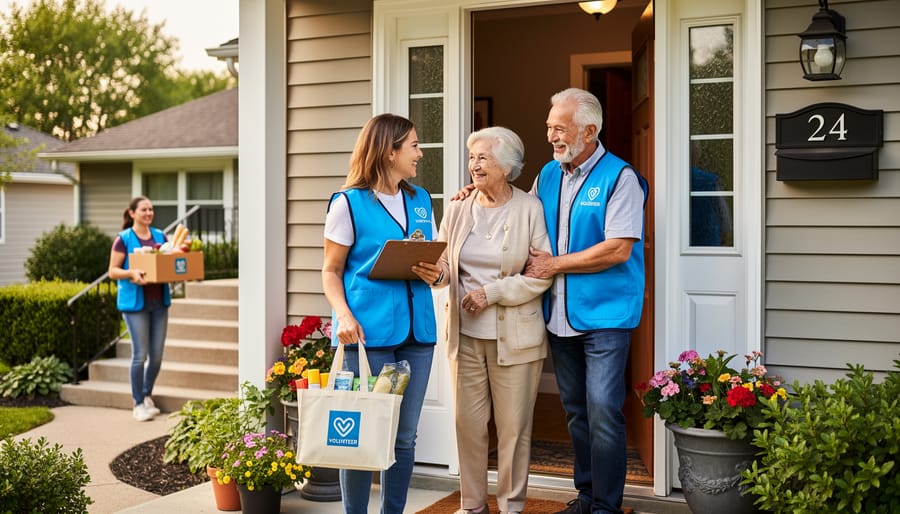
The question “Can Christians serve alongside people of other faiths?” finds its answer not in modern interfaith initiatives, but in Scripture itself. The biblical foundation for interfaith caregiving rests on principles Jesus taught and modeled throughout His earthly ministry.
The parable of the Good Samaritan stands as perhaps the most powerful scriptural endorsement of crossing religious boundaries to help others. When Jesus told of a Samaritan, considered a religious outsider by Jews, stopping to care for a wounded Jewish traveler while religious leaders passed by, He wasn’t just teaching about compassion. He was dismantling the notion that our service should be limited by religious affiliation. The lawyer’s question “Who is my neighbor?” received a radical answer: your neighbor is whoever needs your help, regardless of their faith tradition.
Jesus’s own ministry consistently crossed religious and cultural boundaries. He healed the Roman centurion’s servant, praised the faith of a Canaanite woman, and spoke with the Samaritan woman at the well. These weren’t accidental encounters but deliberate demonstrations that God’s love extends to all people. When we engage in biblical service through interfaith caregiving, we’re following Christ’s example of meeting human need wherever we find it.
The command to “love your neighbor as yourself” (Mark 12:31) contains no religious prerequisites. First John 4:20 challenges us directly: if we claim to love God while refusing to love our brother, we’re deceiving ourselves. Caring for vulnerable community members, whether they worship in a church, mosque, synagogue, or nowhere at all, fulfills this command.
Participating in interfaith caregiving doesn’t dilute our Christian identity. Rather, it provides opportunities to demonstrate Christ’s love through actions that speak louder than words. We maintain our convictions while showing the compassion that defines genuine faith, allowing our service to be a living testimony of the Gospel.
How Interfaith Caregiver Programs Operate
Volunteer Recruitment and Training
Interfaith caregiver programs typically recruit volunteers through announcements at participating churches, synagogues, mosques, and other faith communities. Religious leaders promote the opportunity during services and in newsletters, emphasizing the chance to serve neighbors in need. Potential volunteers submit applications through a central program coordinator who oversees the recruitment process.
Programs conduct thorough screening before placing volunteers with vulnerable adults. This includes in-home caregiver background checks and reference verifications to ensure care recipients’ safety. Some programs also conduct interviews to assess volunteers’ motivations, availability, and interpersonal skills.
Training sessions prepare volunteers for respectful, effective service across cultural and religious boundaries. Orientation covers program policies, confidentiality requirements, and communication protocols. Specific training addresses cultural competency, how to honor diverse religious practices, dietary restrictions, and customs you might encounter in care recipients’ homes. Programs teach practical caregiving skills like safe transportation assistance, fall prevention, and recognizing signs of elder abuse or neglect. Most importantly, training emphasizes maintaining your Christian witness through loving action while respecting the beliefs and dignity of those you serve, regardless of their faith tradition.
Matching Caregivers with Care Recipients
The matching process begins when someone contacts the interfaith caregiver program, often through a referral from a healthcare provider, family member, or faith community. A program coordinator conducts a thorough intake assessment, discussing the person’s specific needs, schedule preferences, and any special requirements like mobility assistance or dietary restrictions.
Using this information, coordinators review their volunteer database to identify caregivers whose skills, location, and availability align with the care recipient’s needs. Geography plays a practical role, matching volunteers who live nearby reduces travel time and increases the likelihood of consistent service. The coordinator also considers personality factors and any specific requests from either party.
Once matched, the coordinator facilitates an initial meeting between volunteer and care recipient, allowing both to establish rapport and clarify expectations. This personal introduction helps build trust and ensures everyone understands the scope of services.
Ongoing coordination doesn’t end after the match. Program staff maintain regular contact with both volunteers and recipients, checking on service quality, addressing concerns, and adjusting arrangements as needs evolve. This oversight ensures consistent care and provides support when challenges arise, creating sustainable caregiving relationships built on accountability and mutual respect.
Benefits of Interfaith Caregiving Collaboration

Participating in interfaith caregiver programs offers profound benefits that extend far beyond the practical help provided. For Christian volunteers, serving alongside people of different faiths creates unexpected opportunities for spiritual growth. When you bring meals to a Jewish neighbor or drive a Muslim elder to appointments, you experience firsthand what it means to love your neighbor without qualification. These encounters challenge you to live out your faith authentically while respecting others, deepening your understanding of grace and humility.
The impact on care recipients is equally significant. Vulnerable individuals receive compassionate support regardless of their religious background, experiencing love in action rather than just words. An isolated senior doesn’t need to choose between receiving help and maintaining their faith identity. They simply receive care from someone who genuinely cares.
For the broader community, interfaith caregiving programs serve as powerful bridge-builders. When volunteers from different congregations work together toward common goals, stereotypes dissolve and genuine friendships form. These relationships ripple outward, transforming communities by demonstrating that people of different faiths can collaborate effectively while maintaining their distinct identities.
From a practical standpoint, interfaith collaboration dramatically expands service capacity. A single church might struggle to provide consistent caregiver coverage, but ten congregations working together can serve hundreds of neighbors. This pooled effort allows volunteers to contribute according to their availability rather than feeling overwhelmed by constant demands.
Perhaps most importantly, interfaith caregiving becomes a living witness to Christian love. Your actions speak louder than any sermon when you serve someone of another faith with kindness and competence, asking nothing in return.
Getting Involved as a Christian Volunteer
Finding an interfaith caregiver program is simpler than many Christians expect. Start by contacting local senior centers, Area Agencies on Aging, or your city’s volunteer coordinator, they typically maintain lists of active programs. Many interfaith initiatives partner with established networks of Christian volunteer opportunities so ask your church office if they participate or know of nearby programs.
- Search online for “interfaith caregivers” plus your city or county name, or call 211 for community service referrals
- Contact the program coordinator to express interest and request information about volunteer requirements
- Complete the application and background check process, which typically takes two to three weeks
- Attend the orientation session where you’ll learn program policies, caregiving basics, and cultural sensitivity guidelines
- Participate in initial training covering practical skills like safe transportation, effective communication, and recognizing when to seek professional help
- Receive your first assignment and establish contact with your care recipient
Most programs ask for commitments of two to four hours weekly, though flexibility exists. Expect one to two hours of training initially, with occasional refresher sessions throughout the year.
Approach this ministry viewing it as an extension of Christ’s command to serve the least among us. Your faith remains your foundation. You’re not compromising beliefs by helping someone of a different tradition, you’re demonstrating the practical love Jesus modeled. Many volunteers find their own faith deepens through cross-cultural encounters that challenge them to articulate and live out their convictions with greater intentionality and grace.
Common Questions About Interfaith Caregiving
Serving in an interfaith caregiving context raises thoughtful questions for Christian volunteers. Here are answers to some of the most common concerns.
Can I share my faith with care recipients of other religions?
You can share your faith authentically when appropriate, but avoid proselytizing during caregiving visits. Let your actions demonstrate Christ’s love, and be ready to discuss your beliefs if the recipient asks genuine questions about your motivation or worldview.
What if I’m asked to participate in religious practices I’m uncomfortable with?
You’re not required to participate in another faith’s religious rituals. Politely decline while remaining respectful, you might say, “I’d like to wait here quietly while you pray” or offer to step into another room. Most care recipients and programs respect these boundaries.
How should I pray for someone of a different faith?
Pray for them in your own time using their name and specific needs, just as you would for any neighbor. If they request prayer during a visit, you can offer to pray silently, pray aloud in Jesus’s name if they’re comfortable with that, or simply express your care and promise to keep them in your prayers.
Will working with volunteers from other faiths compromise my Christian witness?
Serving alongside others strengthens your witness by demonstrating that Christian love extends beyond church walls. Your consistent compassion, integrity, and willingness to serve “the least of these” speaks volumes about your faith without requiring theological agreement with fellow volunteers.
Remember that your primary role is caregiving, not evangelism. The relationships you build through faithful, compassionate service often open doors for spiritual conversations that forced religious discussions never would. Trust that living out Matthew 25:40, serving Christ by serving the vulnerable, is itself a powerful testimony.
Volunteer interfaith caregiving offers you a powerful way to live out the Gospel in your community right now. When you serve a homebound neighbor, drive someone to a medical appointment, or simply sit with an isolated senior, you’re embodying the love of Christ in the most practical terms. These aren’t abstract acts of charity, they’re tangible expressions of the faith Jesus modeled when he crossed social and cultural boundaries to care for people others overlooked.
Participating in interfaith caregiver programs doesn’t dilute your Christian witness. Instead, it gives you opportunities to demonstrate God’s love through actions that speak louder than words. You’ll build genuine relationships with people from different backgrounds while staying rooted in your own convictions. The elderly widow you visit doesn’t need you to compromise your beliefs, she needs your consistent presence, your willing hands, and your compassionate heart.
God calls us to care for the vulnerable, and interfaith programs multiply our capacity to answer that call. Research interfaith caregiver organizations in your area today. Contact your church about getting involved. The neighbors in your community who need help aren’t waiting for theological agreement, they’re waiting for someone who will show up.