
God’s peace meditation is a Christian contemplative practice that invites you to rest in the stillness of God’s presence, allowing Scripture and prayer to calm anxious thoughts and center your heart on Christ. Unlike secular mindfulness techniques that focus on emptying the mind, this practice fills your awareness with biblical truth, particularly passages about peace, and creates space for the Holy Spirit to speak. The core method involves choosing a peace-focused Scripture, settling into quiet prayer, and gently returning your attention to God’s Word whenever distractions arise.
This practice meets you exactly where you are. Maybe you’re carrying the weight of financial stress, relationship conflict, or spiritual exhaustion. Perhaps the constant noise of modern life has left you feeling disconnected from the inner calm Jesus promised. God’s peace meditation offers a biblically grounded pathway back to rest, one that Christians have practiced in various forms for centuries.
The beauty of this approach lies in its simplicity. You don’t need special training, expensive resources, or hours of free time. Ten to fifteen minutes of focused, Scripture-saturated quiet can transform your day and, over time, reshape how you carry stress. This isn’t about achieving a mystical experience or earning God’s favor through perfect technique. It’s about learning to receive what Christ already offers: “Peace I leave with you; my peace I give you” (John 14:27). When practiced consistently, this meditation becomes a sanctuary where anxiety loses its grip and God’s presence becomes tangible, equipping you to face whatever lies ahead with genuine spiritual strength.
What You’ll Need for God’s Peace Meditation
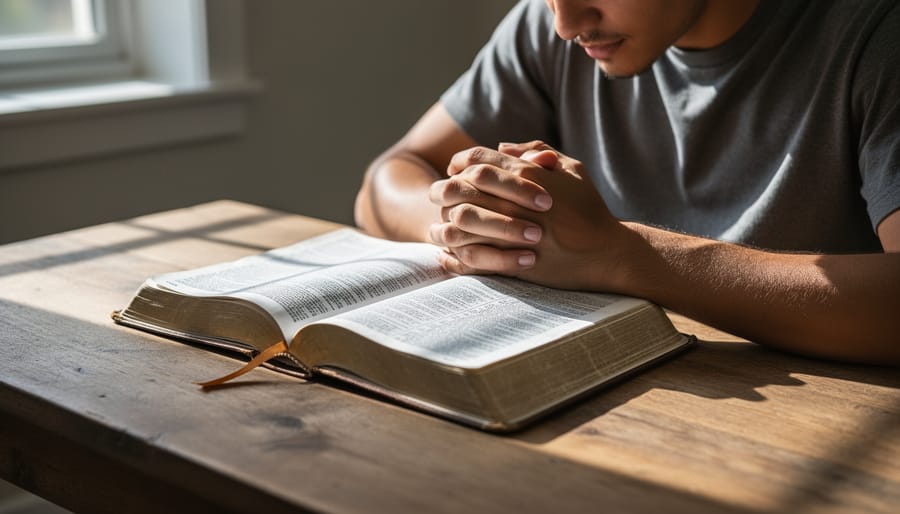
God’s peace meditation is one of the most accessible spiritual practices you can begin today. You don’t need special equipment, expensive courses, or years of training. What you do need falls into two categories: tangible items and intangible readiness.
For the physical setup, gather these essentials:
- A Bible or Bible app with Scripture passages on peace
- A quiet space where you won’t be interrupted
- Comfortable seating, a chair, cushion, or even your bed
- A journal and pen for recording insights
- 15-30 minutes of uninterrupted time
- A prayerful attitude of openness to God
Your quiet space doesn’t need to be elaborate. A corner of your bedroom, a spot in your living room before others wake, or even your parked car during lunch can work. The goal is simply to minimize distractions so you can focus on God’s presence.
Beyond these tangible items, bring yourself with an open heart. God’s peace meditation requires willingness to be still, which can feel uncomfortable at first in our busy lives. You’ll need a faith posture that trusts God wants to meet you in the silence, even when your mind races or doubts creep in.
If you’re worried about doing it “right,” let that concern go now. God isn’t grading your performance. He’s simply inviting you to rest in His presence. Come as you are, with whatever faith you have today. The Spirit will guide you from there, transforming these simple elements into sacred space where divine peace becomes real.
Important Considerations Before You Begin
Before you begin this practice, take a moment to understand what God’s peace meditation truly is, and what it isn’t. This is Christian meditation anchored in Scripture and relationship with God, not an exercise in emptying your mind or detaching from reality. You’re not trying to achieve a blank state; you’re intentionally filling your awareness with God’s presence, His promises, and His character. The goal is communion with the living God who invites you to “be still and know that I am God” (Psalm 46:10).
Don’t approach this as a magic formula that guarantees instant peace the moment you close your eyes. God’s peace develops as fruit in a growing relationship, not as a transaction. Some days you’ll sense His presence powerfully; other times the practice will feel dry or difficult. Both experiences are normal and valuable. Trust the process rather than demanding immediate emotional payoff.
Be honest with yourself about why you’re practicing. If you’re using meditation to avoid difficult conversations, necessary decisions, or professional help you genuinely need, you’re misusing a good tool. God’s peace doesn’t mean passivity. Sometimes He calls us to courageous action, reconciliation, or seeking wise counsel, and meditation should clarify that calling, not obscure it.
Finally, practice with appropriate boundaries. Don’t meditate when you’re exhausted to the point of collapse, thinking it will substitute for rest. God designed your body to need sleep. Similarly, if you have a trauma history or struggle with dissociation, consider practicing initially with a trusted spiritual director or Christian counselor who can help you engage safely. Discernment and balance honor both your spirit and the body God gave you.
How to Practice God’s Peace Meditation: Step-by-Step
Step 1: Settle Into God’s Presence
Find a quiet spot where you won’t be interrupted for the next 10-20 minutes. This might be a favorite chair, a corner of your bedroom, or even your parked car during lunch break. God meets you wherever you are.
Sit in a comfortable position with your spine naturally straight but not rigid. Rest your hands gently in your lap or on your knees. If sitting is difficult, lying down works too, just stay alert enough to be present.
Close your eyes or soften your gaze downward. Take a deep breath and acknowledge that you’re stepping out of the rush of your day into sacred time with your Creator.
Invite the Holy Spirit with a simple prayer: “Lord, I’m here. Still my heart and quiet my mind. Help me receive your peace.” No elaborate words needed, just honest openness to His presence.
Step 2: Ground Yourself in Scripture
Once you’ve settled into stillness, open your Bible to a verse that speaks directly to God’s peace. Choose one passage and stay with it rather than jumping between multiple texts. Philippians 4:6-7 offers reassurance about bringing everything to God in prayer. John 14:27 contains Jesus’ direct promise of peace unlike the world’s version. Isaiah 26:3 connects steadfast trust with perfect peace.
Read your chosen verse out loud first, then silently. Let each word register. If your mind skips ahead or drifts, that’s normal. Simply return to the beginning and read again. You might read the same verse three or four times, noticing different phrases each round. Pay attention to words that stand out or stir something in your heart. This isn’t speed-reading for information but slow savoring for transformation. The goal is letting Scripture sink beneath surface understanding into the deeper soil of your spirit where God’s peace takes root.
Step 3: Breathe and Release Tension
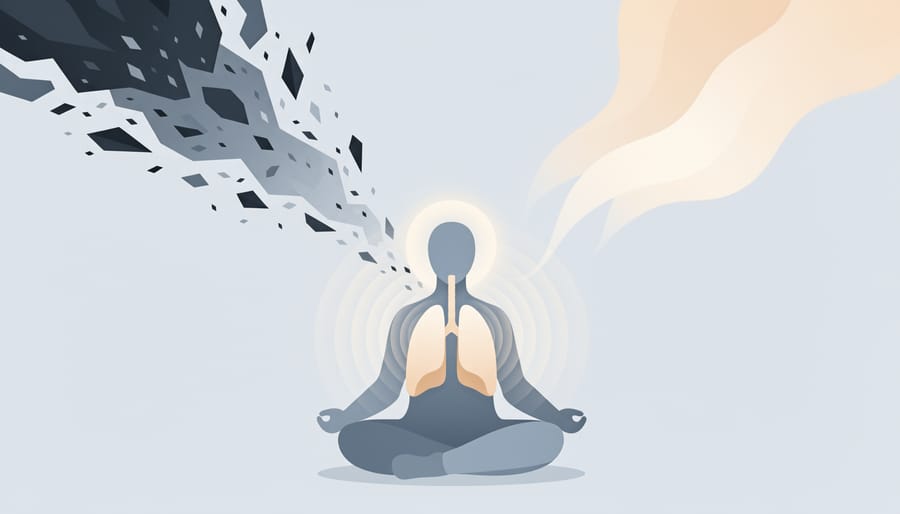
With your body settled and Scripture anchoring your thoughts, turn your attention to your breath. Breathe slowly and naturally, no need to force it. As you inhale, imagine drawing in God’s peace like fresh air filling your lungs. As you exhale, consciously release the tension you’ve been carrying: that worry about tomorrow, the hurt from yesterday, the burden you can’t fix on your own.
Try pairing simple words with each breath: breathe in “Your peace, Lord,” breathe out “I let go.” This isn’t just a relaxation technique; you’re physically enacting surrender. Your tight shoulders, clenched jaw, racing heart, these hold anxiety your spirit wants to release to God. Let each exhale be a small prayer of trust, acknowledging He’s big enough to handle what you’re setting down. Repeat this rhythm for several breaths until you feel your body soften.
Step 4: Meditate on God’s Character

Now shift your attention from the verse itself to the One who spoke it. Let the truth you’ve just read become a window into God’s character, His unwavering faithfulness, His boundless goodness, His complete sovereignty over every circumstance troubling your heart.
Turn the verse over slowly in your mind, like examining a precious stone. If you’re meditating on “the peace of God, which transcends all understanding,” consider what it reveals: God offers peace that doesn’t depend on your ability to figure everything out. He remains steady when life feels chaotic.
Picture Christ’s presence with you in this moment. Some find it helpful to imagine Jesus sitting beside them, His calm radiating outward. Others simply rest in the awareness that He promised, “I am with you always.”
Recall a specific time you experienced His peace before, perhaps during a past crisis when unexpected calm settled over you, or a moment when worry lifted inexplicably. Let that memory anchor your confidence that the same God who brought divine calm then is present now, ready to do it again.
Step 5: Listen in the Silence
After you’ve meditated on God’s character, resist the urge to fill every moment with words. Let yourself simply rest in His presence. This is where many of us feel uncomfortable, we’re not used to quiet. Your mind will likely wander, and that’s okay. Racing thoughts about your to-do list aren’t the same as God speaking; His voice brings clarity, not chaos.
God rarely shouts. He whispers truth that resonates deep in your spirit, often confirming what Scripture already says. You might sense a gentle conviction, a surprising comfort, or a fresh perspective on something you’ve been wrestling with. Don’t force it or manufacture an experience. Some days you’ll sense His nearness strongly; other days the silence itself becomes the gift. Both are valuable. If nothing profound happens, you haven’t failed. You’ve simply been present with your Father, and that matters more than any mystical experience.
Step 6: Respond in Prayer
After resting in God’s presence and listening for His voice, let your heart naturally shift into conversation with Him. This isn’t about formal language or getting the words perfect, it’s simply talking to your Father who loves you.
Start by thanking God for the peace you’ve experienced, even if it’s just a small measure. Express gratitude for His faithfulness and presence. Then bring your specific concerns to Him, not as anxious demands but as honest offerings. Name what weighs on you: the relationship conflict, the financial worry, the health concern. Hand each one over, trusting His care.
Ask for continued guidance to walk in His peace beyond this meditation time. Pray for wisdom to respond to challenges with His calm rather than your anxiety. You might pray something like, “Lord, help me remember this peace when I face that difficult conversation today.”
Let your prayer flow naturally. There’s no required length or structure, just genuine communion with God.
Step 7: Carry Peace Forward
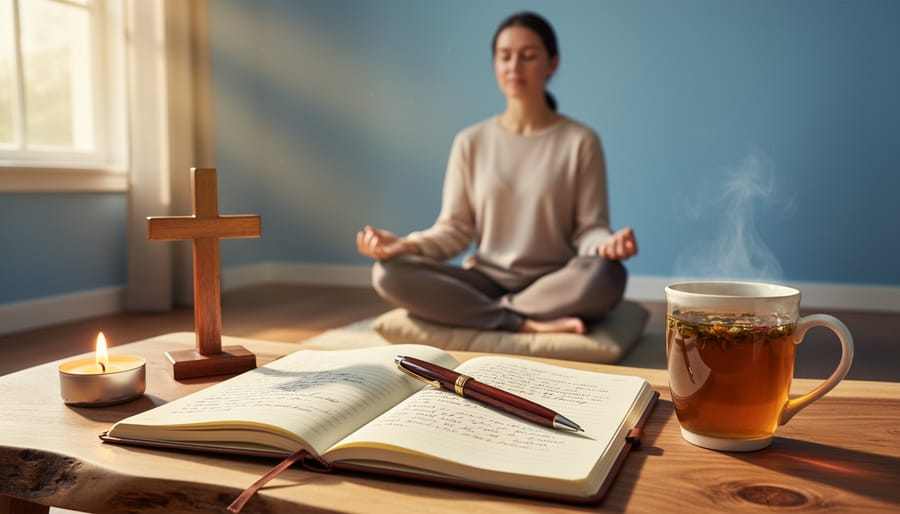
As your meditation time draws to a close, don’t rush back into activity. Take a moment to acknowledge the gift of peace you’ve received. Place your hand over your heart and thank God for meeting you in this sacred space.
Before you stand, set a gentle intention for the hours ahead. You might silently pray, “Lord, help me remember Your peace when challenges arise today.” This isn’t about striving to maintain perfect calm, it’s about staying aware that God’s peace remains accessible to you.
If you keep a journal nearby, write down one word or phrase that captures what you received during this time. Maybe it’s “rest,” “trust,” or “His nearness.” These brief notes become reminders you can revisit when stress mounts later. Some people also jot down a single practical way they’ll extend peace to someone else today, turning inward reflection into outward action.
Take three slow breaths, then gently open your eyes and return to your day, carrying God’s presence with you.
How to Know It’s Working and What Comes Next
The fruit of God’s peace meditation reveals itself gradually, like dawn breaking rather than a light switch flipping. You’ll notice the changes first in small moments: a traffic delay that would have sent your thoughts spiraling now feels manageable, or a difficult conversation leaves you centered rather than shaken. These aren’t dramatic transformations but quiet shifts in how you meet daily life.
Watch for increased patience with yourself and others as a reliable marker of progress. When you find yourself pausing before reacting, extending grace where you once felt irritation, or holding your tongue when old patterns would have pushed you to speak harshly, God’s peace is taking root. Your perspective begins to widen, situations that once consumed your entire emotional field now appear in proper proportion against the backdrop of God’s sovereignty.
Trust deepens in ways you can feel. Scripture verses you’ve meditated on will surface unbidden during stressful moments, steadying your heart before anxiety can spiral. You’ll catch yourself turning to prayer as a first response rather than a last resort. Over weeks and months, the background hum of worry that once colored your days fades to a whisper.
Set realistic expectations from the start. Some days your mind will wander constantly; other sessions will feel deeply connected. Neither defines your progress. Peace is fruit that develops through faithful tending, not a technique that produces instant results. Commit to practicing at least three times weekly for a month before evaluating its impact.
To deepen your practice, gradually extend your meditation time by five-minute increments as stillness feels more natural. Explore different Scripture passages focused on peace, letting God guide which verses resonate most. Consider keeping a simple journal noting what you heard or sensed during meditation, patterns emerge over time that reveal God’s consistent work in your heart.
Integration matters as much as individual practice. The peace you cultivate in meditation should flow into how you live among others. Join with fellow believers in community prayer, bringing your growing stillness into corporate worship. Let the peace you’re receiving fuel your work as a peacemaker in relationships, addressing conflicts with grace rather than avoidance or aggression. Some find their meditation practice naturally leads them toward justice work, channeling divine peace into action that heals brokenness in the world.
For beginners, focus simply on consistency these first months. If you’re established in the practice, explore contemplative prayer traditions or spiritual direction to go deeper. Those ready for the next level might consider how God is calling you to become an agent of peace beyond your personal devotional life.
What You Need
You’ll need very little to begin God’s peace meditation, this practice is designed to be accessible wherever you are. Start with a quiet space where you won’t be interrupted for 10-20 minutes. This might be a corner of your bedroom, a comfortable chair, or even your parked car during lunch break.
Keep a Bible nearby, either physical or digital. Choose a translation you find readable and meaningful. A journal and pen are helpful for capturing insights or prayers that emerge, though not required. Some people find a cushion or blanket adds physical comfort.
Beyond these tangible items, bring an open heart and willingness to be still before God. You don’t need special training or years of prayer experience. Come as you are, with whatever weighs on your mind today. Your faith posture matters more than your physical setup, approach this time expecting to meet with the God of peace, who promises His presence to all who seek Him. This meditation complements other spiritual disciplines like Scripture study and peacemaking in relationships, helping you cultivate inner calm that flows outward into daily life.
Common Questions About God’s Peace Meditation
What if my mind keeps wandering during meditation?
A wandering mind is completely normal and doesn’t mean you’re doing it wrong. When you notice your thoughts drifting, simply acknowledge them without judgment and gently return your focus to the Scripture or God’s presence. This redirection itself is part of the practice, each time you return, you’re training your heart to rest in Him.
How long should I practice God’s peace meditation?
Start with just five to ten minutes if you’re new to this practice. As you grow more comfortable, you might extend to fifteen or twenty minutes. Quality matters more than duration, ten focused minutes with God outweighs thirty distracted ones. Let the Holy Spirit guide you rather than watching the clock.
Can I practice this meditation with my children?
Absolutely. Adapt the practice to their age and attention span, perhaps starting with three to five minutes. Choose simple verses they understand, use concrete language about God’s love, and let them sit however feels comfortable. You’re planting seeds of peace that will grow throughout their lives.
How is this different from secular meditation or mindfulness?
While both involve stillness and focused attention, God’s peace meditation is Christ-centered and relational. Rather than emptying your mind or achieving detachment, you’re filling your thoughts with Scripture and opening your heart to the Holy Spirit. The goal isn’t inner calm alone but communion with the living God who is Himself our peace.
Does this replace my regular prayer time?
Not at all. Think of God’s peace meditation as one expression within your broader prayer life, complementing rather than replacing intercessory prayer, thanksgiving, or worship. Some days you might practice this meditation, other days you’ll engage in different forms of prayer. God welcomes all sincere approaches to His presence.
What if I don’t feel peaceful right away?
Peace often develops gradually rather than arriving instantly. Some sessions will feel more fruitful than others, and that’s okay. Keep showing up faithfully, trusting that God is at work even when you don’t sense immediate results. The fruit of consistent practice accumulates over weeks and months, transforming you in ways you might not notice day to day.
Remember that questions like these reflect the honest concerns of believers learning a new spiritual discipline. God honors your willingness to seek Him, even when the practice feels awkward or your expectations aren’t immediately met. Many Christians find it helpful to journal briefly after meditation sessions, noting both struggles and breakthroughs. Over time, patterns emerge that show how faithfully the Lord has been meeting you in the stillness.
If you’re feeling discouraged, talk with a trusted spiritual mentor or pastor who can offer personalized guidance. Every believer’s journey looks slightly different, and there’s no single “right” way to experience God’s peace. The essential element is your openness to His presence and your commitment to creating space where He can speak into your life. Trust that He who began this good work in you will be faithful to complete it.
You don’t need to be an expert meditator or a spiritual giant to experience God’s peace. He meets you right where you are, in your restlessness, your doubts, your wandering thoughts. The beautiful truth is that God’s peace isn’t something you achieve through perfect technique. It’s a gift He longs to give you as you simply show up and make space for His presence.
Start small if you need to. Five minutes of sitting quietly with Scripture is enough to begin. God honors even our fumbling attempts to draw near to Him. As James 4:8 promises, “Come near to God and he will come near to you.” Your faithful practice, however imperfect, creates the stillness where you can hear His voice and feel His presence.
This personal peace you’re cultivating isn’t meant to stay private. As you experience God’s calming presence in meditation, you’ll find yourself becoming a peacemaker in your relationships, your community, your world. The peace that fills you naturally flows outward, touching everyone around you.
We’ve gathered additional resources on prayer practices, biblical meditation, and Christian community at Key Way Canada. Explore what speaks to your heart, and remember that every step toward God’s peace is a step worth taking. May you know the peace that truly does pass all understanding, today and always.