
The family integrated church movement is a way of doing church in which families worship, learn, and serve together rather than splitting up by age for most of the gathering. Children, teens, parents, and grandparents sit in the same room, hear the same Scripture, and sing the same songs. Instead of handing spiritual formation off to a nursery or youth program, the movement asks parents to lead it, with the congregation walking alongside them.
The idea draws on passages like Deuteronomy 6:6-7, where God’s people are told to talk about his words at home, on the road, at bedtime, and at sunrise. Supporters see faith as something woven into daily life, not confined to a Sunday classroom. Others in the wider Christian family value age-graded ministry and have thoughtful reasons for it, and that’s worth honoring as we look at this together.
This article explains what the movement is, how it works week to week, the different forms it takes, and how its ideas might fit your own household and church. You’ll also find simple ways to bring shared faith into holidays and ordinary evenings, whether or not your congregation ever changes its Sunday schedule.
What the Family Integrated Church Movement Means
The Biblical Roots Behind the Idea
When people point to Scripture for the family integrated church movement, they usually begin with Deuteronomy 6:4-9. After the call to love the Lord with all your heart, Moses tells parents to impress God’s words on their children, talking about them “when you sit at home and when you walk along the road, when you lie down and when you get up.” Faith was woven into ordinary hours, not saved for a single weekly event. That pattern echoes the biblical parenting principles many families still lean on today.
Psalm 78:4-7 widens the picture, describing one generation telling the next so that “the children yet to be born” would put their trust in God. Ephesians 6:4 gently urges fathers to bring children up in the training and instruction of the Lord. Many see here Parents as primary Bible teachers with the wider church standing beside them.
Scripture also shows the gathered community. In Nehemiah 8:2-3, men, women, and “all who were able to understand” listened together as the Law was read. Joel 2:16 calls the elders and even nursing infants to assemble. Faith moved through the table, the road, and the congregation at once.
How Family Integrated Churches Work in Practice
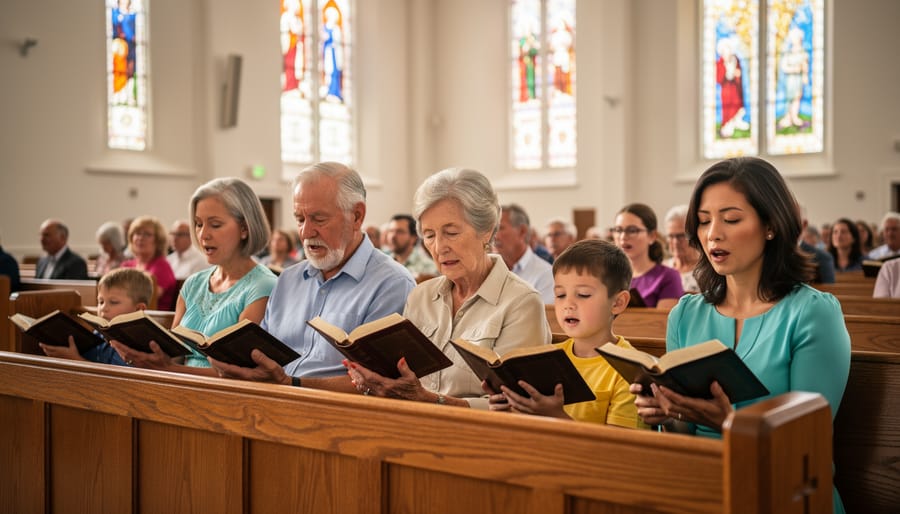
Most family integrated churches share a handful of simple practices. Families worship together in one gathering rather than splitting off into age-based classes. The preaching and teaching are meant to be understood by a nine-year-old and still stretch a grandfather. Parents are encouraged to see themselves as the main teachers of their children’s faith, and the church sees its job as equipping them for that work. Older believers walk alongside younger families, offering the kind of mentoring Titus 2 describes.
A typical Sunday might look like this: families arrive and greet one another, then sit together for singing, prayer, Scripture reading, and a sermon. Children are welcome in the room, wiggles and all. Many churches finish with a shared meal, which is often where the real mentoring happens, over casseroles and coffee.
The rest of the week matters just as much. Families are often encouraged to hold a short time of devotions at home, perhaps after dinner. Some churches offer a midweek gathering for prayer or study, and some host classes that help parents learn how to teach Scripture to their children. An older couple might invite a young family over for supper, or a grandmother might pray weekly with a new mom.
Here is an illustrative example. Imagine the Parkers, a family of five visiting for the first time. Their youngest, three-year-old Eli, announces “I’m hungry!” during the opening prayer. Their eight-year-old drops a pencil, and the baby fusses through the first hymn. Mom and Dad exchange nervous glances, ready to apologize.
But an older woman in the row behind them leans forward and smiles. “Those sounds are music to this church,” she whispers. After the service, she offers to sit with the children next week so the parents can listen more closely. Later that afternoon, the Parkers talk about the sermon at the table, and their eight-year-old retells the story of Zacchaeus in her own words. It wasn’t a tidy morning, but something took root.
That blend of messiness and meaning is common. Faithful churches find that faith is often learned in the ordinary moments of living and worshipping side by side, just as Psalm 78:4 describes: “We will not hide them from their children, but tell to the coming generation the glorious deeds of the Lord.”
Different Expressions of the Movement Across Churches

Churches that share the heart of this movement don’t all look alike. Some build their entire gathering around the idea, while others borrow a few of its practices, and each one is trying to help families pass faith from one generation to the next.
Here are a few of the common models:
- Fully integrated congregations: Everyone worships, learns, and serves together, with no separate classes by age.
- Blended models: Families worship together in the main gathering, with some age-specific teaching offered at other times.
- Churches with intergenerational elements: Traditional age-based programs continue, but shared meals, mentoring, and family-led services bring generations together regularly.
- Home-centered approaches: The church supports parents with resources and training so that discipleship happens mainly around the family table.
You’ll notice these overlap. A congregation might begin with a monthly all-ages service and slowly grow into something more integrated, or it might happily stay somewhere in the middle. Neither path is a failure or a finish line.
It also helps to remember that thoughtful, faithful Christians land in different places on this question. Some see age-specific ministry as a gift that lets children learn at their own level. Others believe shared worship forms them best. Many appreciate a bit of both. Pastors and parents who hold each view usually share the same desire: to see children grow to know and love the Lord.
As you consider what fits your own church and family, it may be worth asking not “Which model is right?” but “Which approach helps the generations in our community grow closer to one another and to God?” That question leaves room for grace, and it invites the kind of prayerful conversation that serves families well.
How Families Use These Ideas to Weave Faith into Everyday Traditions
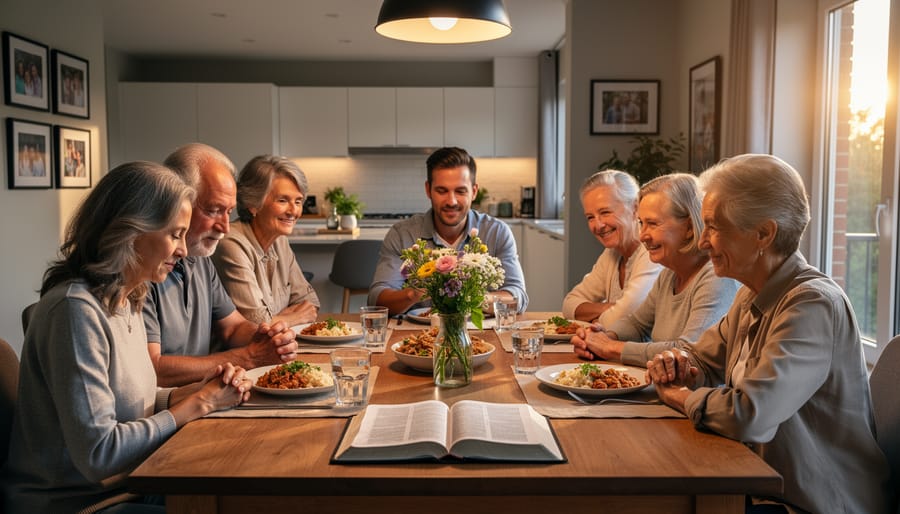
You don’t have to attend a family integrated church to borrow its best habits. The heart of the movement is simple: faith gets passed along when generations share real life together, and that can start at your own kitchen table. Whether you’re a single parent, a blended family, grandparents raising grandchildren, or a household with teenagers who’d rather be elsewhere, a few small rhythms can make a lasting difference.
Think of it as weaving faith into traditions you already have, rather than adding one more thing to a packed calendar. Start where your family actually is, and let the habits grow slowly.
- Mealtime blessings: Take turns thanking God aloud before dinner, and let the youngest or the newest believer go first.
- Family worship: Set aside ten minutes a few evenings a week to read a short passage, sing one song, and pray together.
- Scripture memory: Pick one verse a month, write it on the fridge or mirror, and say it together on the drive to school.
- Serving together: Choose one regular act of service, like dropping off meals for a neighbour or helping at a food bank, and do it as a team.
- Sharing testimonies: Invite a grandparent or older friend to tell how God met them in a hard season, and let the kids ask questions.
- Advent and Christmas: Light a candle each week and read a Gospel passage, and try a few Jesus-centered Christmas activities that suit your household.
- Easter: Walk through Holy Week with a simple nightly reading, ending with a sunrise breakfast and a time of praise.
- Thanksgiving and harvest: Go around the table naming specific ways God has provided this year, and write them down to read again next November.
None of these needs to look polished. A toddler will wiggle through the devotion, a teenager may roll their eyes, and the memory verse might get mangled. That’s fine. Faith is often caught as much as taught, and children remember the warmth of showing up together long after they forget the lesson.
Flexibility matters too. If evenings are chaotic, try breakfast or bedtime. If you’re parenting solo, invite a church friend or relative to join in, and let others fill the gaps. When we see how church and family strengthen one another, it becomes easier to lean on the wider community rather than carry every tradition alone.
Common Questions About Family Integrated Churches
Many families come to this topic with real questions and a little worry. Here are some honest answers, offered with grace and without judgment toward any church model.
Is a family integrated church required for raising faithful children?
No. Scripture calls parents to teach their children the faith (Deuteronomy 6:6-7), but it doesn’t prescribe one church structure. Faithful families grow in many kinds of congregations, and God’s grace works in every one of them.
What about families with toddlers or children with special needs?
Most churches that worship together plan for wiggles, noise, and sensory needs, offering quiet spaces, flexible seating, and patient welcome. Every family is different, so it’s wise to talk with church leaders about what will help your child worship with peace and dignity.
Where do single-parent families and those with unbelieving spouses fit?
Right in the middle of God’s family. The church is meant to be a household of faith, and older believers can come alongside as mentors, mealtime friends, and extra hands. A believing parent can also lead gently at home through prayer and example, trusting God with the rest (1 Peter 3:1-2).
How can we explore this approach if our church is organized differently?
Start small. You might sit together as a family during worship, invite another generation to dinner, or begin a simple family devotion at home. Many churches welcome ideas like these without changing their overall structure.
Whatever you’re weighing, please don’t treat it as a test of faithfulness. A family’s love for Christ isn’t measured by where the children sit on Sunday morning. Take your questions to the Lord in prayer, open your Bible together, and talk honestly with your pastor and with trusted believers who know your family. As Proverbs 3:5-6 reminds us, we’re invited to trust the Lord with all our hearts and lean on his wisdom rather than our own. Your family’s path may look different from another’s, and that’s okay. What matters most is that each generation is drawn closer to him, one ordinary, faithful day at a time.
Picture that family again, three generations in one pew, a toddler whispering a little too loudly while Grandpa smiles and turns the page. That image holds the heart of the whole movement. Whether your church gathers everyone in one room or offers a mix of shared and age-specific teaching, the goal is the same: helping every generation know and love the Lord.
You don’t need a perfect plan to begin. This season, try one small step, such as reading a short passage of Scripture together at the dinner table. When you’re ready for more, explore Key Way Canada’s Bible study and family resources.
“As for me and my house, we will serve the Lord” (Joshua 24:15). May He bless your family’s traditions, one generation to the next.