
Oral tradition in the Bible refers to the practice of passing down stories, teachings, laws, and prophecies by word of mouth from one generation to the next before they were eventually written into Scripture. For centuries before Moses inscribed the Law or the Gospel writers set pen to parchment, God’s people preserved sacred truths through careful memorization, repeated recitation, and communal retelling.
Understanding oral tradition matters because it speaks directly to a question many believers wrestle with: Can we trust that what we read in Scripture today accurately reflects what God revealed thousands of years ago? The answer is rooted in both the supernatural work of the Holy Spirit and the remarkably effective memory techniques ancient cultures used to safeguard their most precious truths.
Long before literacy was widespread, oral transmission wasn’t a backup plan or a limitation. It was the primary, culturally respected method of preserving truth. Ancient Jewish communities, in particular, developed sophisticated practices for memorizing and reciting long passages with extraordinary precision. Rabbis could quote entire books from memory, and disciples would repeat their teacher’s words until they became second nature.
This article will walk you through what oral tradition looked like in biblical times, how the process worked to maintain accuracy, the different types of oral traditions we find woven throughout Scripture, and real examples that show us this living tradition in action. You’ll discover why oral tradition doesn’t undermine the Bible’s reliability but actually strengthens our confidence in the God who speaks and ensures His Word endures.
What Oral Tradition Means in Biblical Context
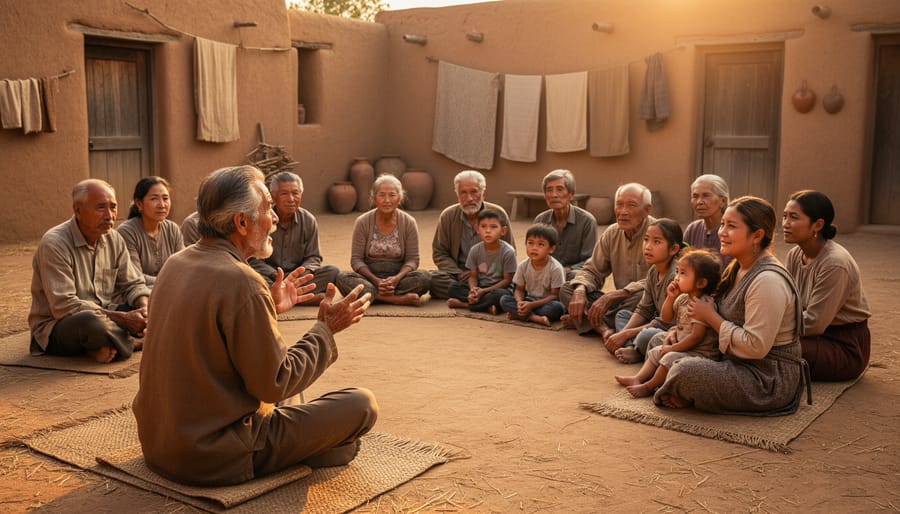
Oral tradition in the Bible refers to the way God’s Word, stories, and teachings were passed down through spoken word from person to person, generation to generation, long before pen touched parchment. Think of it as a sacred relay race where faithful believers carefully carried the truth forward through memorization, repetition, and communal recitation. These weren’t casual retellings or telephone-game whispers. They were deliberate, Spirit-guided acts of preservation performed by people who valued accuracy and understood they were handling the very words of God.
- Oral Tradition
- The deliberate spoken transmission of stories, laws, teachings, and testimonies through memorization and repetition across generations. In biblical context, this was a careful, community-verified process guided by the Holy Spirit.
- Transmission
- The act of passing information from one person or generation to another, whether through speech, song, or ritual practice. Biblical transmission involved both individual memorization and communal accountability.
- Eyewitness Testimony
- First-hand accounts from people who directly experienced events, particularly important in the Gospels where apostles shared what they saw and heard from Jesus. These testimonies formed the foundation of early Christian oral tradition.
- Oral Culture
- A society that primarily relies on spoken communication rather than written texts for preserving and sharing knowledge. Ancient Israel and the early church functioned as oral cultures where memory skills were highly developed.
It’s crucial to understand that oral tradition wasn’t inferior to written Scripture or a less trustworthy substitute. Rather, it was the God-ordained method for His people in specific times and contexts. Written texts eventually complemented and confirmed what communities had faithfully preserved through speech, but the transition didn’t happen because oral tradition failed. Both forms worked together in God’s plan, with the written Word anchoring what had been carefully guarded in memory and practice.
How Oral Tradition Worked in Ancient Israel and the Early Church
The Role of Memory in Ancient Cultures
In ancient oral cultures, memory wasn’t a convenience, it was a necessity and a cultivated skill. People who couldn’t rely on written records developed extraordinary capacities to memorize and recall lengthy passages, genealogies, and teachings with precision. Children learned through repetition and rhythm, often embedding Scripture in song or poetry to make it memorable. Teachers and elders were trained from youth to carry entire books of the Law or prophetic oracles in their minds, reciting them word-for-word during community gatherings.
This wasn’t mere human effort. Christians believe the Holy Spirit actively guided faithful believers in preserving God’s Word. Just as Jesus promised His disciples that the Spirit would “bring to your remembrance all that I have said to you” (John 14:26), the Spirit worked through generations of believers to protect the integrity of what was passed down. Memory in these cultures was sacred stewardship, not chance recollection.
Archaeological and anthropological studies confirm that oral societies routinely transmitted complex material across centuries with remarkable accuracy, especially when spiritual significance and community accountability were involved.
Community Accountability and Correction
The faith community itself acted as a living safeguard for oral tradition. In ancient Israel and the early church, believers didn’t receive teachings in isolation. Stories about God’s mighty acts, covenant promises, and the life of Jesus were shared publicly in synagogues, homes, and gatherings where many people heard the same accounts repeatedly.
This communal setting created natural accountability. If a teacher altered a familiar story or misquoted a well-known teaching, listeners who had heard it countless times would recognize the error and provide correction. Elders and religious leaders bore special responsibility for maintaining accuracy, but the entire community participated in preserving what they had received.
Think of it like a treasured family recipe passed down through generations. When someone tries to change an ingredient, family members who’ve made that recipe for years will notice immediately and set the record straight. Similarly, the Holy Spirit worked through faithful believers who guarded the integrity of God’s Word, ensuring that what one generation received matched what the next generation would pass on.
Forms of Oral Tradition Found Throughout Scripture
The Bible preserves several distinct forms of oral tradition, each carefully shaped to serve a specific purpose in teaching, worship, and community life. Understanding these different types helps us see how God’s people faithfully transmitted His Word across generations.
Genealogies formed a foundational type of oral tradition, functioning as more than mere family trees. These memorized lists, like those in Genesis 5 and Matthew 1, connected individuals to God’s covenant promises and established identity within the faith community. Israelite families recited these lineages to remember who they were and where they belonged in God’s story.
Poetry and songs created particularly memorable oral traditions. The Psalms, many of which were sung in worship long before being written, used rhythm, repetition, and emotional language that made them easy to remember and pass down. Songs like Moses’ victory song in Exodus 15 or Deborah’s song in Judges 5 captured theological truths in forms designed for communal recitation and celebration.
Parables and wisdom sayings provided practical teaching through vivid stories and concise truths. Jesus drew on this established tradition when He taught in parables, knowing His listeners were accustomed to learning through memorable narratives. The book of Proverbs preserves another type, short, punchy wisdom sayings that parents and teachers could easily repeat and children could readily remember.
Prophetic oracles carried God’s direct messages to His people. Prophets like Isaiah and Jeremiah first spoke their warnings and promises aloud, often in poetic form, before these words were recorded. The rhythmic, repetitive structure of many prophecies helped communities remember and repeat these urgent messages.
Covenant laws formed perhaps the most carefully preserved oral tradition. The Ten Commandments and other laws were taught, recited, and memorized as the foundation of Israel’s relationship with God. Parents were commanded to teach these laws to their children continually, talking about them at home, on the road, morning and evening.
Gospel accounts represent the 4 oral traditions coming together in the early Church. The apostles’ eyewitness testimonies about Jesus, what He said, did, and taught, circulated orally for years before being written down, shaped by the needs of worship, teaching, and evangelism in new Christian communities.
Each form served God’s purpose of keeping His Word alive and active among His people.
Where We See Oral Tradition at Work in the Bible
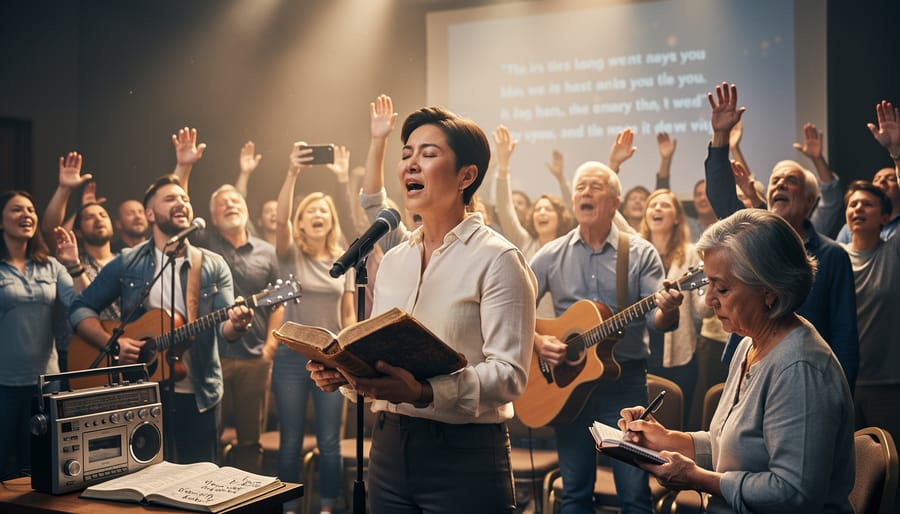
The Bible itself shows us oral tradition in action, giving us a front-row seat to how God’s people shared and preserved His Word through spoken testimony.
When Moses came down from Mount Sinai, he didn’t hand out printed copies of the Ten Commandments. He spoke God’s Law to the assembled people of Israel, who then taught it to their children and grandchildren. Deuteronomy 6:7 captures this pattern: parents were to talk about God’s commands “when you sit at home and when you walk along the road, when you lie down and when you get up.” The Law lived first in the daily conversations of families and communities.
The Psalms began as songs sung in worship long before they were collected into a book. Psalm 78 explicitly describes itself as passing down “what we have heard and known, what our ancestors have told us” to the next generation. These weren’t just read silently, they were memorized, chanted, and sung together, embedding God’s truth in the hearts of worshippers through repetition and melody.
Jesus himself relied heavily on oral teaching. He told parables that listeners could remember and retell, using vivid images like lost sheep, prodigal sons, and mustard seeds. His disciples didn’t take notes during the Sermon on the Mount. They absorbed His words, reflected on them together, and shared them with others who hadn’t been there.
The early church preserved the Gospel message through eyewitness accounts that were spoken repeatedly in worship and teaching. Paul reminds the Corinthians that he’s passing on “what I received”: the core message of Christ’s death, burial, and resurrection (1 Corinthians 15:3-4). Scholars recognize Philippians 2:6-11 as an early Christian hymn that believers sang together, proclaiming Christ’s nature and work through poetic verses that predated Paul’s letter.
Each example reveals the same pattern: God’s truth was spoken, heard, remembered, and faithfully shared before ink ever touched parchment.
From Spoken Word to Written Scripture
The shift from spoken stories to written Scripture happened gradually, guided by God’s wisdom and the needs of His people. Writing didn’t erase oral tradition; instead, it gave the community a permanent, authoritative record alongside the living practice of storytelling and teaching.
Israel began writing down sacred traditions early in its history. Moses recorded the Law on stone tablets and in scrolls, creating a lasting witness to God’s covenant. Later, during times of crisis or transition, communities felt the urgency to preserve what they knew. The Babylonian exile, for example, prompted the Jewish people to collect and write their stories, laws, and prophecies so future generations wouldn’t forget who they were or whose they were.
In the New Testament era, the apostles initially taught by word of mouth, just as Jesus had. But as eyewitnesses aged and the church spread across distant lands, writing became essential. Letters circulated to guide scattered believers, and eventually the Gospels captured Jesus’s life and teachings in permanent form.
Throughout this process, oral and written traditions worked hand in hand. Communities continued teaching aloud, singing psalms, and sharing testimonies while also reading Scripture together. Writing didn’t freeze the Word; it anchored it, giving believers both a stable foundation and a living voice that still speaks today.
Why Oral Tradition Matters for Christians Today

Understanding oral tradition isn’t just an academic exercise, it transforms how we engage with Scripture and our faith community. When we recognize that God entrusted His Word to faithful witnesses who memorized, recited, and carefully passed down His teachings, we gain deeper confidence in the Bible’s reliability. The same Holy Spirit who inspired the original words also guided their preservation through generations of believers who stewarded these sacred stories with reverence and precision.
This understanding also enriches how we interpret certain passages. When we encounter genealogies, repeated phrases, poetic structures, or teaching patterns in Scripture, we’re seeing the very techniques that made oral transmission effective. These weren’t literary flourishes added later, they were intentional memory aids that helped God’s people carry His truth in their hearts.
Most importantly, oral tradition reminds us that faith was never meant to be private or silent. Just as ancient believers shared testimonies around fires and taught children God’s wonders through story, we’re called to speak our faith aloud. When we practice intergenerational discipleship share personal stories of God’s faithfulness, or teach Scripture to our children, we’re continuing the beautiful tradition that preserved God’s Word for us. Your testimony, spoken and lived, becomes part of the ongoing story of how God’s people carry His truth forward.
Common Questions About Oral Tradition in the Bible
Was oral tradition reliable?
Yes. Ancient cultures developed exceptional memory skills, and the faith community held storytellers accountable for accuracy. The Holy Spirit also guided faithful transmission of God’s Word, ensuring that essential truths were preserved accurately across generations.
How long were stories passed down orally before being written?
The timeframe varied. Some Old Testament stories were likely shared orally for centuries before Moses wrote them down, while New Testament accounts were written within a few decades of Jesus’ ministry. The key is that these weren’t casual retellings but carefully guarded testimonies.
Did oral tradition change the stories over time?
Minor variations in wording occurred, but the core message and facts remained consistent. The community’s role in preserving and correcting the tradition, combined with structured memorization techniques, protected against significant changes or distortions.
How do we know the Bible is accurate if it started orally?
Oral transmission in ancient Israel wasn’t like a game of telephone. Trained teachers memorized Scripture verbatim, communities verified accuracy together, and God’s Spirit guided the process. Understanding what translation means also helps us protect biblical truth across languages and generations.
Does oral tradition mean the Bible isn’t inspired?
Not at all. God inspired both the spoken testimonies and the written texts. The Holy Spirit worked through human memory, teaching, and writing to preserve His Word faithfully, whether delivered by mouth or pen.
These questions surface because we live in a culture where information changes rapidly and accuracy feels uncertain. But God equipped His people with what they needed for their time, just as He equips us now. Oral tradition wasn’t a weakness or a flaw in the plan. It was the reliable, Spirit-guided method through which faithful witnesses shared what they’d seen, heard, and experienced of God’s work in the world.
Understanding oral tradition helps us see Scripture not as words frozen in time, but as a living testimony passed down with care and faithfulness by God’s people. The same Holy Spirit who guided the apostles in their teaching continues to work through believers today as we share what God has done in our lives.
When you tell your children about God’s faithfulness, when you share your testimony with a friend, when you teach Sunday school or lead a small group, you’re participating in this ancient practice of passing down truth through spoken witness. Your story becomes part of the ongoing narrative of God’s work in the world.
The oral tradition that preserved Scripture before it was written reminds us that God’s Word was never meant to be locked away on a shelf. It was spoken, sung, taught, and lived out in community. That same vibrant, personal sharing of faith still matters today.
As you read the Bible, remember the generations of faithful believers who memorized these words, recited them together, and entrusted them to their children. Then ask yourself: What stories of God’s faithfulness am I passing on? Whose life might be touched by hearing what God has done in mine? The tradition continues through you.