
Modern Christianity beliefs represent the lived faith of millions of believers who seek to follow Jesus Christ while engaging authentically with contemporary culture, technology, relationships, and ethical questions. At its core, modern Christianity maintains the foundational truths of Scripture while grappling with how ancient wisdom speaks to 21st-century life.
This isn’t about watering down faith or compromising biblical truth. Rather, it’s about understanding how timeless principles guide us through challenges the early church never encountered: parenting in a digital age, building marriages amid cultural shifts, stewarding creation responsibly, and loving neighbors across increasingly diverse communities.
Today’s Christians hold fast to essentials like the divinity of Christ, salvation through grace, the authority of Scripture, and the call to love God and neighbor. Yet how believers express these truths varies widely. Some embrace contemporary worship styles and casual church settings. Others find depth in liturgical traditions. Many blend both, seeking substance over form.
The questions facing modern believers are deeply practical. How do we raise children with biblical values when culture pulls in opposite directions? What does Christian community look like when people connect online as much as in person? How should we respond to scientific discoveries, social movements, and moral debates through a scriptural lens?
This article explores how contemporary Christians understand and apply their faith across four key areas: what modern Christianity actually means, how it functions in everyday life, the core beliefs that unite diverse traditions, and practical ways these convictions shape families, relationships, and personal decisions in 2026.
What Modern Christianity Means Today
Modern Christianity refers to how believers today live out the unchanging truths of Scripture within contemporary culture. It’s not a departure from historical Christian faith but rather the same gospel message applied to 2026 realities, smartphones, blended families, workplace challenges, and social media interactions that early church believers never encountered.
At its heart, modern Christianity maintains the same core doctrines that have defined the faith for two millennia: Jesus Christ as Lord and Savior, salvation through grace, the authority of Scripture, and the call to love God and neighbor. What has evolved isn’t the message itself but how believers communicate it, express worship, and navigate daily challenges that look different from previous generations.
- Contemporary Worship
- Modern expressions of praise that honor God through current musical styles, technology, and creative arts while maintaining biblical focus and theological depth.
- Biblical Authority
- The conviction that Scripture remains God’s inspired, trustworthy Word and the ultimate guide for faith and practice, even as believers engage with modern scholarship and cultural questions.
- Grace-Based Living
- Emphasis on Christ’s redemptive work as the foundation for Christian life rather than performance-driven religion, extending mercy while upholding truth.
- Inclusive Fellowship
- Welcoming diverse backgrounds, ages, and life experiences into Christian community while maintaining commitment to biblical teaching and mutual accountability.
Modern Christians wrestle with questions previous generations rarely faced. How do we honor God online? What does biblical stewardship look like with digital resources? How do we apply Proverbs’ wisdom about raising children when they face pressures through screens that didn’t exist a generation ago? These questions matter deeply when considering modern family dynamics and how faith shapes everyday household decisions.
The distinction matters because modern Christianity isn’t about watering down Scripture to fit culture. Instead, it’s about believers who take the Bible seriously enough to ask, “How does this eternal truth speak to my specific situation today?” That question drives authentic faith that transforms both individuals and families.
How Modern Christian Beliefs Work in Practice

Scripture as Foundation
Modern Christians view Scripture not as an ancient relic, but as living, active truth that speaks directly into 2026 life. The Bible remains the non-negotiable foundation, the measuring stick against which all beliefs, practices, and cultural trends are tested. Rather than cherry-picking verses or bending Scripture to fit contemporary preferences, genuine believers submit their thinking to God’s Word, even when it challenges popular opinion.
This doesn’t mean ignoring context or culture. Today’s Christians study historical backgrounds, original languages, and literary genres to understand what Scripture meant to its first readers before applying those timeless principles now. They recognize that while cultural expressions change, worship styles, family structures, technology, biblical truth doesn’t shift with trends. A young parent seeking wisdom about screen time and a grandparent navigating social media both return to the same source: God’s revealed character and commands.
The practice involves daily engagement, reading, memorizing, meditating, and weaving God’s truth into conversations, decisions, and relationships. Modern believers ask, “What does Scripture actually say?” before asking, “What feels right?” They test cultural messages against biblical patterns, letting the Word shape their worldview rather than retrofitting the Bible to match it.
Grace and Truth Together
Modern Christians navigate a tension that Jesus himself embodied: speaking truth without compromise while extending grace without condition. This balance shows up in everyday family conversations, addressing a teenager’s choices, responding to a relative’s lifestyle, or handling conflict with a spouse.
John 1:14 describes Jesus as “full of grace and truth,” not one or the other. Grace without truth becomes permissiveness that fails to guide toward transformation. Truth without grace becomes harsh judgment that pushes people away from God rather than drawing them closer.
In practice, this means modern believers learn to hold firm convictions about what Scripture teaches while treating others with the same compassion Christ showed. A parent might clearly explain biblical boundaries around behavior while also listening deeply to their child’s struggles. A spouse addresses hurt honestly yet forgives freely, reflecting both God’s standards and His mercy.
This isn’t compromise, it’s following Christ’s example. He never watered down truth, yet sinners felt safe approaching Him. Modern Christians aim for that same combination, knowing families thrive when truth provides direction and grace provides the safety to grow.
Community and Accountability
Modern believers recognize that faith isn’t meant to be lived in isolation. The early church modeled this in Acts 2:42-47, where believers devoted themselves to fellowship, breaking bread together, and sharing life daily. Today’s Christians continue this pattern through small groups, accountability partnerships, and active participation in local congregations where church and family reinforce one another’s spiritual growth.
Authentic community provides the safety to confess struggles without judgment while offering gentle correction when needed. Hebrews 10:24-25 urges believers to “spur one another on toward love and good deeds,” not abandoning fellowship but encouraging each other. This accountability helps modern Christians resist cultural pressures that conflict with Scripture, whether around marriage, parenting choices, or ethical decisions at work.
Beyond scheduled church services, meaningful fellowship happens in everyday moments, texting a prayer, grabbing coffee to check in, or gathering families for meals. These relationships create the spiritual infrastructure that sustains faith through doubt, celebrates victories, and reminds believers they’re part of something larger than themselves.
Core Components of Modern Christian Faith
Unchanging Biblical Truths
Certain biblical truths form the bedrock of Christian faith, unchanged since the apostles first proclaimed the Gospel. The Trinity, God existing as Father, Son, and Holy Spirit, remains central to how believers understand God’s nature (Matthew 28:19). The deity of Christ, His virgin birth, sinless life, sacrificial death, and bodily resurrection continue as non-negotiable tenets that separate Christianity from other belief systems.
Scripture’s authority hasn’t diminished with passing generations. “All Scripture is God-breathed and is useful for teaching, rebuking, correcting and training in righteousness” (2 Timothy 3:16, NIV) applies as fully to modern Christians as it did to Timothy. The Bible’s truth doesn’t shift with cultural trends or popular opinion.
Salvation through faith alone, by grace alone, in Christ alone stands firm. Ephesians 2:8-9 declares, “For it is by grace you have been saved, through faith, and this is not from yourselves, it is the gift of God, not by works, so that no one can boast.” No generation of believers has ever earned their way to heaven through good deeds or religious performance.
God’s moral character remains constant. He is still holy, just, loving, and merciful. His standards for righteousness haven’t evolved to accommodate modern sensibilities. What He called sin in Genesis, He calls sin today, not because rules are arbitrary, but because He never changes (Malachi 3:6).
Contemporary Expressions of Faith
Modern Christians express ancient biblical truths through forms that resonate with contemporary culture while maintaining doctrinal integrity. Today’s believers might worship through modern music styles, from contemporary worship songs to gospel-infused hip-hop, yet they’re singing the same psalms of praise David wrote millennia ago. They gather in traditional church buildings, coffee shops, living rooms, or even online communities, but the fellowship described in Acts 2 remains their model.
Technology has become a significant vehicle for faith expression. Christians share Scripture verses on social media, participate in online Bible studies, and listen to podcasts exploring theology during their commutes. Prayer apps send reminders, digital journals track spiritual growth, and video calls enable small groups across distances. These tools are new; the disciplines they support are timeless.
Many modern believers integrate faith into everyday creativity. Christian artists create graphic designs with biblical themes, writers craft novels exploring redemptive arcs, and filmmakers produce content reflecting God’s truth. Parents teach their children through interactive Bible apps alongside traditional bedtime prayers. Young adults might serve the homeless while documenting their outreach to inspire others online.
This blending of ancient truth with contemporary expression helps Christianity remain accessible to each generation. The medium changes, but the message, Christ’s gospel, God’s love, and Scripture’s authority, stays constant. Modern Christians understand that while cultural forms evolve, the eternal truths they express never do.
The Role of Personal Relationship with God
At the heart of modern Christianity is a personal relationship with Jesus Christ, not just intellectual agreement with doctrine, but daily communion with a living God. This intimacy with Christ through prayer, Scripture reading, and the Holy Spirit’s guidance shapes how believers make decisions, respond to challenges, and find purpose. While previous generations might have emphasized institutional membership or adherence to tradition, today’s Christians prioritize knowing God personally. This doesn’t mean individualism run wild; rather, it means each person encounters Christ directly while remaining deeply connected to the body of believers who encourage, challenge, and walk alongside them in faith.
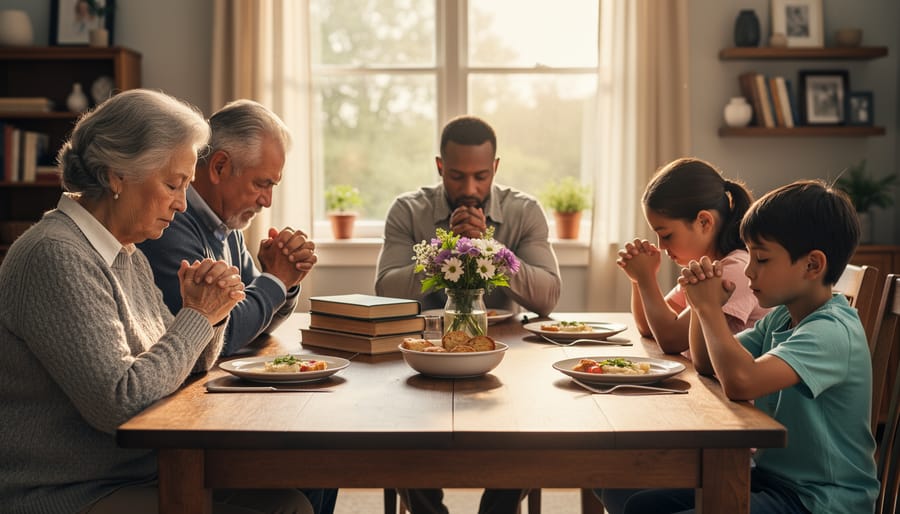
Modern Christianity Applied to Family Life
Biblical Marriage in Contemporary Context

Modern Christian marriage begins with the covenant foundation described in Ephesians 5:21-33, where mutual submission reflects Christ’s relationship with the church. This isn’t about hierarchical control but about two believers choosing to serve one another out of reverence for Christ. Contemporary Christians recognize that “submitting to one another” comes before specific role descriptions, establishing partnership as the framework.
The biblical truths about marriage emphasize sacrificial love rather than authority. When Ephesians calls husbands to love their wives as Christ loved the church, it demands self-giving service, not dominance. Wives’ respect isn’t diminishment but active partnership in building the household. Modern believers apply these principles by making major decisions together, valuing each spouse’s insights equally, and recognizing that gender roles don’t determine worth or capability.
Contemporary Christian marriages also navigate dual careers, shared parenting responsibilities, and financial partnership in ways previous generations didn’t face. Believers maintain biblical foundations while adapting practical expressions. Genesis 2:24 speaks of becoming “one flesh,” which modern couples understand as complete unity in purpose, finances, parenting philosophy, and spiritual direction.
The permanence of covenant marriage remains central. Malachi 2:16 reminds believers that God hates divorce, yet modern Christians also recognize biblical grounds for separation in cases of abuse or abandonment while pursuing reconciliation where possible. The goal stays consistent: reflecting God’s faithful love through lifelong commitment.
Parenting with Grace and Wisdom
Modern Christian parents face unique challenges their own parents never encountered, from managing screen time to addressing complex cultural messages. Yet the biblical foundation remains clear: “Train up a child in the way he should go; even when he is old he will not depart from it” (Proverbs 22:6). This isn’t about rigid rules, but about transforming Christian parenting through grace-filled discipline and consistent spiritual formation.
Deuteronomy 6:6-7 calls parents to integrate faith into everyday moments, conversations at dinner, drives to school, bedtime routines. Modern Christian parents embrace this by praying with their children about real struggles, discussing how biblical values apply to friendship conflicts, and modeling repentance when they mess up. They understand that disciplining children “in the Lord” (Ephesians 6:4) means correction that points toward growth, not punishment driven by frustration.
Grace doesn’t mean permissiveness. It means setting boundaries that protect while explaining the “why” behind them. Modern Christian parents teach their children to think critically about what they consume online while maintaining open dialogue. They acknowledge their kids will face questions about faith and culture that have no simple answers, preparing them to stand firm on truth while extending compassion to others. The goal isn’t raising perfect children, but disciples who know they’re deeply loved by God and equipped to live out their faith authentically.
Navigating Extended Family and Generational Differences
Extended family relationships test our faith in unique ways. When three or four generations gather, each shaped by different cultural moments and church experiences, conflicts over parenting styles, technology use, or spiritual practices surface regularly. Modern Christians approach these tensions through biblical commands that haven’t changed: honor your father and mother (Exodus 20:12), pursue peace with everyone (Hebrews 12:14), and speak truth in love (Ephesians 4:15).
Honoring parents doesn’t mean agreeing with everything they believe or do. It means showing respect through our words and actions, even when setting necessary boundaries for our own households. When grandparents question your parenting choices or express outdated views, respond with kindness while standing firm on convictions you’ve prayerfully established. “I appreciate your concern, and I’m thoughtful about this” diffuses more than defensiveness.
Building multi-generational faith requires intentionality. Create opportunities for grandparents to share their testimony with your children. Their stories of God’s faithfulness carry weight that transcends generational gaps. At the same time, help older relatives see how younger believers express the same faith through different cultural forms.
When conflicts arise, address them privately and promptly rather than letting resentment build. Prayer transforms our perspective before difficult conversations. Ask God to help you see your relatives through His eyes, remembering that we’re all works in progress. The goal isn’t winning arguments but maintaining relationships that reflect Christ’s reconciling love across every generation.
Common Questions About Modern Christian Beliefs

Many families exploring modern Christianity wonder how it differs from their grandparents’ faith, whether contemporary expressions compromise biblical truth, and how to stay grounded amid rapid cultural change. These questions deserve honest, Scripture-based answers that honor both timeless truth and the lived realities of 2026.
One common concern centers on whether modern Christians have softened or diluted the gospel message to fit contemporary culture. The reality is that faithful believers today hold fast to the same core doctrines the early church confessed, Christ’s deity, His death and resurrection, salvation through faith, and Scripture’s authority. What has evolved is not the truth itself but how believers communicate it and live it out in contexts the apostles never faced: digital relationships, blended families, global mobility, and information overload. Modern Christianity distinguishes between eternal principles and cultural expressions, recognizing that following Jesus authentically in 2026 looks different from 1926 without changing who Jesus is or what He calls us to.
How do modern Christians balance tradition and change?
Faithful believers distinguish between biblical commands that never change and cultural practices that can adapt. They test every tradition against Scripture, keeping what honors God and releasing what merely reflects past eras.
Does modern Christianity compromise biblical truth?
Authentic modern Christianity upholds the same doctrinal foundations as historic faith while applying them to contemporary situations. The core message remains unchanged; the methods and expressions evolve to reach people where they are.
How can families stay grounded in Scripture amid cultural shifts?
Regular Bible reading together, prayer, participation in a Bible-teaching church, and intentional discipleship conversations help families filter cultural messages through God’s Word rather than the reverse.
What role does the Holy Spirit play in modern Christian households?
The Holy Spirit remains the active presence of God in believers’ lives, guiding families in decision-making, convicting of sin, empowering for service, and making Scripture come alive in daily circumstances.
Another frequent question involves technology and screen time. Parents ask whether using worship apps, online sermons, or digital Bibles counts as genuine spiritual formation or represents a shallow substitute for traditional practices. The answer depends on the heart behind the use. Technology itself is neutral, a tool that can foster deeper engagement with God’s Word or become a distraction. Families who stream a solid sermon together, then discuss its application over dinner, are experiencing real spiritual growth. Those who scroll through inspirational quotes without meditation or obedience are missing the point regardless of format.
Questions also arise about how to handle disagreements within the family when different generations interpret Scripture’s application differently. Perhaps grandparents believe mothers should never work outside the home, while younger couples see dual-income households as wise stewardship. Modern Christian families navigate these tensions by returning to Scripture’s actual commands rather than cultural assumptions, seeking the Holy Spirit’s guidance through prayer, and extending grace when believers reach different conclusions on non-essential matters. Romans 14 reminds us that Christians can disagree on applications while maintaining unity in the essentials and love for one another.
Living out modern Christianity means anchoring your family in timeless biblical truth while engaging the world around you with grace and wisdom. The principles found in Scripture, love, forgiveness, faithfulness, and sacrificial service, remain as relevant today as they were two thousand years ago. Your challenge isn’t to reinvent Christianity for modern times, but to apply God’s unchanging Word to the unique circumstances you face.
Start where you are. Open your Bible regularly, inviting the Holy Spirit to speak into your specific family situations. Pray with your spouse and children, even if those conversations feel awkward at first. Consistency matters more than eloquence. Find a local church community where you can grow alongside other believers who share your commitment to biblical living.
Remember that transformation happens gradually. You won’t perfect your Christian walk or create an ideal family overnight. What you can do is take one faithful step today, perhaps having a meal together without devices, reading a Psalm with your children, or seeking reconciliation where there’s been conflict. Small, Scripture-rooted actions compound over time.
Modern Christianity isn’t about conforming faith to culture or isolating from the world. It’s about being salt and light in your home first, then extending that influence outward. When your family operates on biblical principles, you demonstrate Christ’s love in tangible ways that point others toward Him.