
Yes, free faith-based recovery programs exist, and you can find one in nearly every community. Churches, ministries, and nonprofit groups open their doors to people struggling with addiction, grief, and other hurts, and most ask for nothing in return. No fee, no insurance paperwork, no pressure to have it all figured out before you walk in.
Most programs follow a simple rhythm. You gather weekly with others who understand, share honestly, work through steps rooted in Scripture, and are paired with a mentor or small group who will walk beside you. Formats vary. Some meet in church basements, some in living rooms, others online, so you can choose what feels safest. Getting started usually takes one phone call, one email, or one quiet seat at the back of a room.
If you’re reaching out for yourself, hear this: asking for help isn’t weakness. Psalm 34:18 says, “The Lord is close to the brokenhearted and saves those who are crushed in spirit.” And if you’re a volunteer, especially as the holidays approach, you may be the open door someone needs. Loneliness presses hardest this time of year, and a warm welcome can change everything.
Below, you’ll find how these programs work and practical steps for finding one near you.
What a Free Faith-Based Recovery Program Actually Looks Like
Common Formats You May Encounter
Free faith-based recovery help comes in several forms, and what you find will depend on where you live and which congregations are nearby. Across different Christian traditions four formats come up most often.
Christ-centered twelve-step groups follow the familiar twelve-step path of honesty, surrender, and making amends, with a Christian focus on God’s grace and healing. Meetings are usually weekly, led by people who have walked the road themselves, and many include scripture reading and prayer.
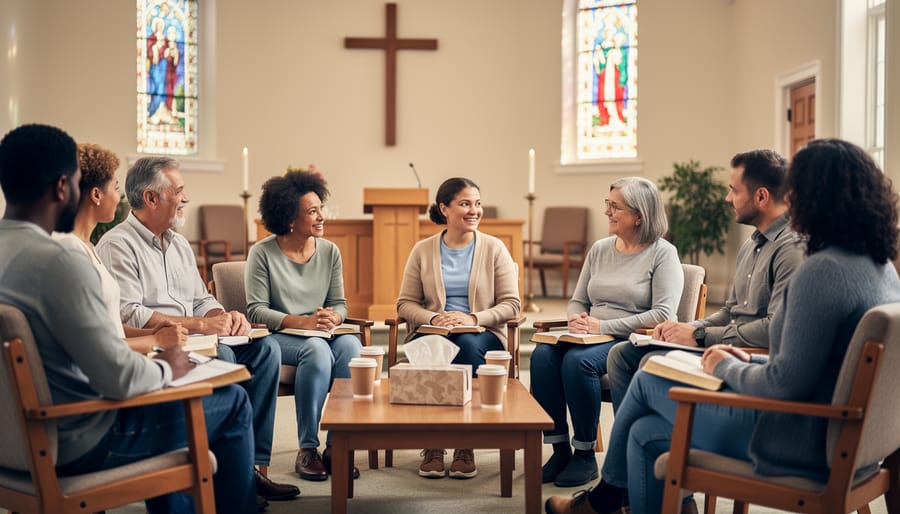
Church-hosted support circles are often less structured. A small group gathers in a fellowship hall or living room to share what the week has held, pray together, and encourage one another. These circles may address addiction, grief, anxiety, or other struggles, and newcomers are typically welcome to simply listen at first.
Mentoring partnerships pair you with someone further along in recovery or faith. You might meet for coffee, text through a hard evening, or pray over the phone. This one-on-one format suits people who find large groups intimidating.
Residential ministry homes offer a place to live and heal for a season, with daily routines, shared meals, and spiritual guidance. Some are supported by donations and volunteers so residents pay little or nothing, though cost and availability differ widely, so it’s worth asking directly.
Not every community has all four options. Some towns have one strong group, while others have several. What matters is finding the setting where you feel safe and supported.
Why the Holidays Are a Powerful Time for Recovery Outreach
The stretch from Thanksgiving to the new year is often painted as the happiest time of the year, but for many people it carries a quiet weight. Loneliness grows louder when everyone else seems surrounded by family. Old tensions resurface around crowded tables. Grief lands harder when an empty chair sits where someone used to be. And so many celebrations are built around alcohol or other substances, which can leave a person in recovery feeling like they have nowhere safe to go.
Yet this same season also stirs something tender in us. Hearts tend to soften at the holidays, and people who might never ask for help the rest of the year are often more willing to reach out. Our faith traditions have always honored seasons of gathering and remembrance, as in the biblical holidays that invited God’s people to come together, rest, and rejoice.
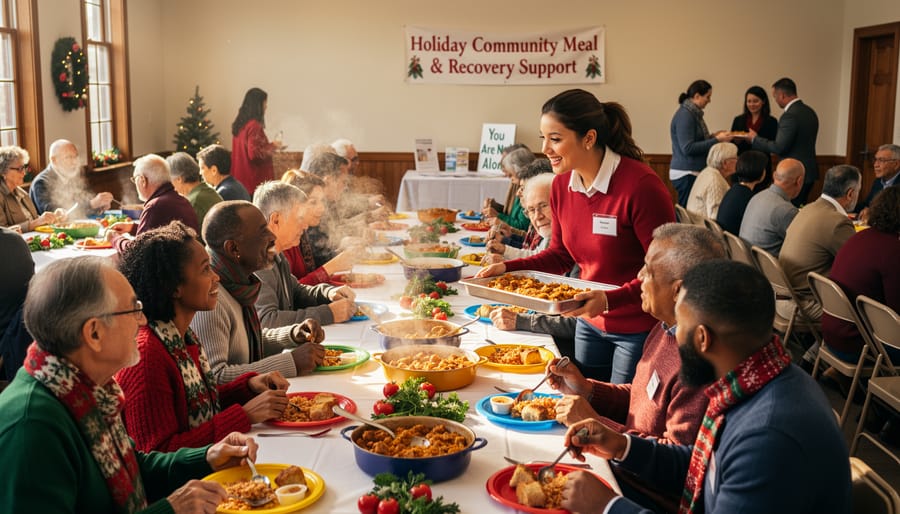
That is where Faith-Based Holiday Outreach Programs shine. Community meals, candlelight gatherings, and sober celebrations offer a warm place to belong without pressure or judgment. For someone who is hurting, they can be a gentle on-ramp into ongoing recovery, with no commitment required beyond showing up.
Picture a man we’ll call Daniel (an illustrative story, not a real event). He had avoided his family’s gatherings for years because he knew he would be tempted to drink. One December evening, he noticed a church hall glowing with candlelight and followed the smell of fresh bread inside. No one asked him why he was there. A volunteer handed him a bowl of soup, pulled out a chair, and simply said, “We’re glad you came.” That small welcome opened the door to a weekly recovery group the following month.
As Psalm 34:18 reminds us, “The Lord is close to the brokenhearted.” Sometimes that closeness arrives in the form of a bowl of soup and an open seat.
How to Find and Join a Free Program Near You

Questions Worth Asking Before Your First Visit
Walking into a new group is easier when you know what to ask. It’s perfectly fine to call or message ahead, and a good program will welcome your questions. Here are a few worth keeping handy:
– Is there any cost? Ask whether there are fees, suggested donations, or materials to buy, and whether anything is truly optional.
– How is my privacy protected? Find out what stays within the group, who keeps attendance or notes, and whether anything is ever shared with the church.
– What does a typical meeting look like? Ask about length, whether you’re expected to speak, and how prayer, Scripture, and sharing are woven in.
– Is childcare available? Many churches offer care for children, or can point you to someone who does.
– How do you work with doctors and counselors? A healthy program will encourage professional care alongside group support, never replace it.
You don’t have to ask everything at once. Even one or two questions can help you feel steadier about taking that first step.
Living Out Biblical Principles Through Holiday Outreach
If you are part of a church family, you may be wondering how you can help someone who is hurting this season. The good news is that you do not need special training to make a real difference. Scripture gives us a simple starting point: “Carry each other’s burdens, and in this way you will fulfill the law of Christ” (Galatians 6:2). Hospitality, in Jesus’ name, is often where healing begins.
Congregations can start by creating recovery-friendly spaces. A holiday meal, a candlelight evening, or a New Year’s gathering without alcohol tells people in recovery that they belong. Keep the atmosphere relaxed and low-pressure. Offer plenty of nonalcoholic drinks, hearty food, and quiet corners for anyone who needs a breather. Hebrews 13:2 reminds us to welcome strangers, since some have shown kindness without realizing how much it meant. For a person who feels isolated, a warm greeting at the door can be the whole reason they stay.
There are plenty of low-barrier ways to get involved, even if you are new to this kind of ministry:
– Serve or deliver meals to those who cannot attend a gathering.
– Offer rides to meetings, appointments, or church events.
– Set up chairs, make coffee, or greet guests at the door.
– Pray for people by name, privately and without prying.
– Simply sit and listen, without fixing, lecturing, or judging.
Small groups can adopt a gathering together, splitting up the cooking, hosting, and cleanup so no one is overwhelmed. Listening may be the most powerful gift of all. Many people carry shame, and a patient, nonjudgmental ear can feel like grace itself.
If you would like to serve beyond your own congregation, look for volunteering opportunities in your community that match your time and gifts. Even one hour a week can help someone feel seen and not alone.
Common Questions About Free Faith-Based Recovery
Many people carry the same worries before they walk through the door for the first time. Here are honest answers to the questions we hear most often.
Do I have to be a Christian or a church member to join?
No. Most free faith-based recovery programs welcome anyone who is struggling, whatever their background or beliefs. You are invited to come as you are, and no one will ask for a membership card.
Are these programs really free?
In most cases, yes. Churches and ministries typically fund them through volunteers and donations, so there’s no fee to attend. If a program does ask for something, such as a small cost for materials or a residential home, ask upfront.
Is it confidential?
Many groups ask members to keep what is shared inside the room, but practices differ from one program to the next. It’s always fair to ask a leader how privacy is handled before you share anything personal.
Can I attend while seeing a doctor or counselor?
Absolutely. Faith-based support is meant to walk alongside professional care, not replace it, and good leaders will encourage you to keep following your doctor’s guidance.
What if I relapse?
A setback does not disqualify you or end your story. Return as soon as you can, because grace is the heart of these communities, and people there will meet you with welcome rather than judgment.
What if I’m new to faith?
That’s perfectly fine. You can simply listen, ask questions, and take your time. If you’re curious about what Scripture teaches on topics that come up, exploring what the Bible says can be a gentle place to start.
If one group doesn’t feel like the right fit, try another. Traditions differ, and the right community often takes a visit or two to find.
Recovery is a journey, and no one has to walk it alone. Whether you are the one who needs a steady hand or the one ready to offer yours, this season is a meaningful time to reach out. Throughout Scripture, the sacred holidays were set apart as times to gather, rest, remember, and be restored together. That same spirit of welcome is alive in churches and ministries today.
So take one small step this week. Call a local church office, ask about a recovery gathering, sit at a community table, or offer an hour of your time to serve. It doesn’t have to be a big leap. A single phone call or a quiet “yes” can open a door.
If you’d like to keep going, Key Way Canada offers Bible study, prayer, and volunteering resources to support you along the way.
“So do not fear, for I am with you; do not be dismayed, for I am your God. I will strengthen you and help you; I will uphold you with my righteous right hand.” (Isaiah 41:10)