
Outreach evangelism ministries are church and community efforts that carry the message of Jesus beyond the sanctuary walls, through acts of service, personal conversation, and a growing number of online tools. At their heart, they follow a simple pattern: meet people where they are, show them love in practical ways, and share the good news with gentleness and respect. Jesus modeled this when he sat at wells, shared meals, and healed the people others walked past.
Most outreach ministries fall into a few familiar forms. Food pantries and clothing drives meet physical needs. Street teams, prison visits, and neighbourhood prayer walks open doors for conversation. Mission trips, both local and overseas, put faith into action alongside partners who know the community best. Today, digital evangelism and outreach adds another layer, using social media, livestreams, and online devotionals to reach people who may never step into a church building but are searching for hope late at night on their phones.
You don’t need a seminary degree or a perfect testimony to take part. A willing heart, a few hours a month, and a desire to love your neighbour as yourself (Mark 12:31) are enough to begin. Whether you’re a new believer wondering where to start, a volunteer looking to serve more fully, or simply curious about what this work involves, the pages ahead walk through how these ministries operate, what they look like in everyday life, and practical, seasonal ways you can join in.
What Outreach Evangelism Ministries Do and Why They Matter
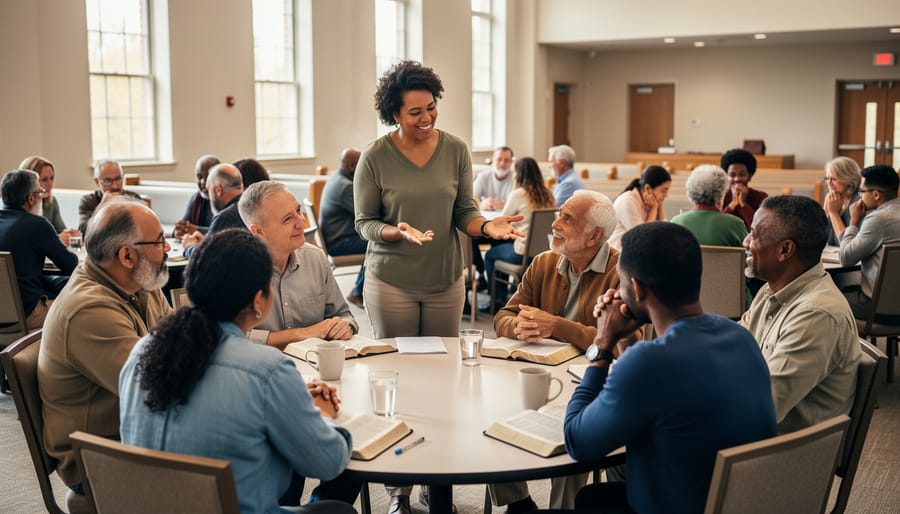
The Biblical Heart Behind Outreach
Sharing faith begins with the heart of God. In Matthew 28:19-20, Jesus gives His followers what we call the Great Commission: to go, make disciples, and teach others to follow Him. Notice that He also promises, “I am with you always.” We are never sent out alone, and we are never asked to carry the results ourselves.
Paul reminds us why this matters in Romans 10:14-15: “How can they believe in the one of whom they have not heard? And how can they hear without someone preaching to them?” Every believer once received good news from someone else. A neighbor, a grandparent, a friend, or a stranger with a kind word likely played a part in your own story. Passing it on is simply a way of saying thank you.
Then 1 Peter 3:15 sets the tone for how we do it. We are to be ready to explain the hope within us, “but do this with gentleness and respect.” That is the pattern for outreach evangelism ministries everywhere: an open door, a warm welcome, and an honest invitation, never pressure or pushing.
Traditional Outreach and Digital Outreach: Better Together
In-person and online outreach aren’t rivals. Each reaches people the other can miss, and together they form a fuller picture of ministry. A hot meal shared at a community table builds trust that a screen can’t replicate, while a late-night devotional can reach someone who isn’t ready to walk through a church door yet.
Think of the online side as a front porch light: it signals that someone is welcome, then leads toward real relationships. The in-person side makes those relationships tangible through volunteering, Bible distribution, and a friendly conversation at a bookstore counter.
| Approach | How People Are Reached | Strengths | Keep in Mind |
|---|---|---|---|
| In-person | Community meals, Bible distribution, volunteering, bookstores | Personal warmth, trust, hands-on service | Limited by distance, schedules, and mobility |
| Digital | Social media, video, devotionals, online studies | Reaches homebound and distant seekers, available anytime | Needs care to feel personal, not impersonal |
When both are woven together, a first click can become a first conversation, and a first conversation can become a lasting friendship in Christ.
How Digital Evangelism and Outreach Is Opening New Doors

Meeting People Where They Are
Not everyone who needs encouragement is ready to walk through a church door. A seeker may have questions they’re too nervous to ask out loud. A new believer might want a gentle place to begin reading Scripture. A lifelong Christian may simply be tired and in need of a fresh word. Online outreach meets each of them at the kitchen table, the bus stop, or the quiet hour after the kids are asleep.
Many ministries now offer free Bible study guides, prayer request pages, and short daily devotionals that anyone can open at their own pace. This kind of digital discipleship lets people grow without pressure. Even digital access to resources can feel like an open hand extended in love.
Tools Ministries Commonly Use
Most outreach ministries rely on a handful of simple, well-tested tools. Short devotional videos and daily Scripture posts offer a quick word of encouragement, and they build the kind of social media connections that can turn a passing visitor into a regular reader. Email newsletters go a step deeper, delivering reflections, testimonies, and ministry updates straight to someone’s inbox.
For people who want to dig into Scripture, online Bible studies create a welcoming space to ask questions at their own pace. Prayer request pages let anyone share a need and know that someone will lift it up. Podcasts reach people during a commute or a walk, when they might never open a book.
Virtual volunteer opportunities round out the list. Moderating a study group, writing encouragement notes, or helping with a ministry’s online presence all let believers serve from wherever they are.
A Story of Connection Beyond the Screen
Consider a simple example, one that reflects how many ministries describe their work. Imagine a young mother, we’ll call her Maria, who has just moved to a new city. Lonely and a little curious about faith, she scrolls past a short devotional video one evening during the baby’s naptime. It speaks gently about God’s care in hard seasons, and she stays to watch.
She leaves a quiet question in the comments. Within a day, a volunteer replies with kindness, a verse to reflect on, and an offer to send her a Bible. No pressure, just welcome.
Weeks later, that same volunteer mentions a small group meeting at a church nearby. Maria hesitates, then goes. Over coffee, she meets people who already know her name and her story.
What began on a screen became a friendship, then a community. That’s the heart of digital outreach: opening a door so that real, face-to-face love can walk through it.
Putting Evangelism Into Practice: Simple Ways to Share Your Faith

Start With Prayer and Listening
Before any message is typed or any conversation begins, outreach starts on our knees. Ask God to open doors, to soften hearts (including your own), and to make you sensitive to the people He has already placed in your path. A simple prayer like “Lord, show me who needs encouragement today” can change how you see everyone you meet, whether in a church lobby or a comment thread. Many believers find that when they see how tools deepen Scripture their prayer life grows along with it.
Then comes the harder part: listening. In John 4, Jesus doesn’t open with a speech to the Samaritan woman at the well. He asks for a drink, notices her story, and meets her real need. Good listening means asking gentle questions and letting people finish their thoughts. Whether you’re across the table from someone or reading their message online, you’ll often find the right words to share only after you’ve truly heard theirs.
Share Your Story Online With Care and Authenticity
When you share your faith online your words can reach people you may never meet in person, so a little care goes a long way. Honesty matters more than polish. Here is a simple way to begin:
- Pray first, asking God to guide what you say and who it reaches.
- Reflect on one moment when you sensed His help or comfort.
- Keep it simple: a few sentences about what happened and what changed in you.
- Include a verse that speaks to your experience, such as Psalm 34:8 or Romans 15:13.
- Invite conversation by ending with a gentle question or an open welcome to reach out.
- Follow up with care, replying kindly to comments and praying for those who respond.
Share only what is true, and speak gently, even when someone disagrees. Your story is not meant to prove a point or win an argument. It is an invitation, offered with humility. If a post feels too personal, trust that feeling and wait. A quiet, honest word of encouragement often lands softer than a polished testimony, and God can use even small offerings in surprising ways.
Serve Alongside Others in Your Community
Online outreach is wonderful, but faith often takes root through a shared meal, a warm handshake, or a helping hand. Serving alongside others in your community gives your words a place to land, because people can see what Christ’s love looks like in action.
Jesus put it simply: “Whatever you did for one of the least of these brothers and sisters of mine, you did for me” (Matthew 25:40). Serving doesn’t require a platform or a polished message. It might mean helping pack Bibles for distribution, joining a community meal, welcoming newcomers at a church event, or offering your time to a local ministry team.
These acts of service also strengthen what happens online. A devotional someone reads on their phone can lead to an invitation, and that invitation means more when a friendly face is waiting. Many ministries find that digital and personal outreach feed one another in just this way.
If you’re wondering where to begin, Key Way Canada offers Bible study resources, bookstore materials, and volunteer opportunities that make it easy to take a first step. Start small, stay faithful, and trust God to multiply what you offer.
Outreach in Every Season: Holidays and Special Occasions
Some of the best moments for outreach arrive on the calendar without any planning on our part. Christmas and Easter, in particular, stir curiosity in people who may not think about faith much the rest of the year. A neighbor who rarely steps into a church might happily accept an invitation to a candlelight service, a carol evening, or a simple coffee-and-conversation gathering.
In person, ministries often lean into hospitality. Think of a holiday meal for those who would otherwise eat alone, care packages for families under strain, or a sunrise gathering that welcomes anyone wanting to reflect on the resurrection. These gestures say “you belong here” long before any words about doctrine are spoken.
Online, the same spirit carries over. A short Advent devotional shared each day, a Lenten reading plan, or a gentle video reflecting on Luke 2 can offer encouragement to someone scrolling late at night. Prayer request pages tend to see more visits during these seasons, so a kind, timely reply can mean a great deal.
Other times of gathering matter too. Thanksgiving, the start of a new year, and seasons of grief or transition all invite reflection. People ask bigger questions when life slows down or shifts, and a warm, unhurried presence helps them feel safe asking.
The key is to keep it welcoming rather than pushy. Invite, don’t pressure. As Colossians 4:5-6 reminds us, let your conversation be gracious and seasoned with salt, trusting God to work in His own time.
Common Questions About Evangelism and Digital Outreach

Many people carry honest questions about sharing their faith, and that’s perfectly okay. Every Christian tradition approaches outreach a little differently, and there’s room for every comfort level at the table. Here are a few gentle answers to the questions that come up most often.
Do I need to be a Bible expert to share my faith?
Not at all. Sharing what God has done in your own life, and admitting what you’re still learning, is often more welcoming than a polished answer. Peter encourages believers to be ready to explain their hope “with gentleness and respect” (1 Peter 3:15).
Is online evangelism as meaningful as in-person ministry?
Both matter, and they work best together. A kind message or devotional can open a door, and a face-to-face conversation or shared meal can help that connection grow.
How do I stay respectful with people who believe differently?
Listen first, ask thoughtful questions, and let love lead. Jesus met people with patience and dignity, and we can do the same without pressure or debate.
How can I support an outreach ministry if I’m shy or short on time?
Small acts count: pray for the team, share an encouraging post, or give a few hours now and then. Many ministries have quiet, behind-the-scenes roles that suit gentle personalities and busy schedules.
Where can I find Bible study and prayer resources to share?
Many ministries, including Key Way Canada, offer Bible study materials and prayer support you can pass along to a friend, a small group, or someone who is searching.
Whatever your questions, remember that you don’t have to have everything figured out to begin. A willing heart, a little prayer, and a posture of kindness are often all that’s needed to take the next step, and God can work through the simplest, most sincere efforts.
Whether you share the gospel through a late-night message to a friend who is struggling, a prayer typed into a comment box, or a warm meal handed across a church table, you are taking part in the same beautiful calling. Digital and personal outreach are not rivals. They are two open doors, and God can use both to draw someone closer to Him.
You don’t need a perfect script or a large platform. Start where you are, listen well, and trust that the Spirit is already at work in the people around you. Small, faithful steps still bear fruit.
As Paul wrote, “I planted the seed, Apollos watered it, but God has been making it grow” (1 Corinthians 3:6).
If you’re ready for a next step, explore Key Way Canada’s Bible study resources, reach out for prayer support, consider volunteering, or browse the bookstore for materials you can share with someone you love. May God bless your witness and give you joy in it.