
No, congregational governance does not make a church theologically liberal. Congregationalism is a form of church government where the local congregation holds decision-making authority, not a theological position. Churches with congregational polity span the entire spectrum from conservative evangelical to progressive mainline traditions.
The confusion is understandable. When you search for information about congregational churches, you’re likely encountering references to the United Church of Christ (UCC), which historically grew from the Congregational Church tradition and does lean theologically progressive. But that’s just one denomination among hundreds that practice congregational governance. Southern Baptist churches, for example, operate with full congregational autonomy and are predominantly conservative. Independent Bible churches, many Pentecostal congregations, and countless non-denominational churches all use congregational polity while holding vastly different theological positions.
Here’s what matters: governance structure and theological orientation are separate issues. Congregationalism simply means the members vote on major decisions like calling a pastor, approving budgets, and setting church direction. It says nothing about what those members believe regarding Scripture, salvation, social issues, or worship style.
This distinction has real implications if you’re searching for a church home or trying to understand a congregation’s beliefs. You can’t assume a church’s theology based on how it’s governed. A congregational church in rural Texas will likely hold different convictions than one in downtown Boston, even though both operate under identical governance structures. Understanding this helps you ask the right questions when exploring a new church community and recognize that Christian unity exists across various forms of government and diverse theological perspectives.
What Congregational Church Governance Actually Means
Congregational church governance is a system where the local church body holds final authority over its own affairs. In this structure, each congregation self-governing meaning members collectively make decisions about doctrine, choose their pastors, approve budgets, and determine church policies through democratic processes like voting in business meetings. The pastor provides spiritual leadership and teaching, but the congregation retains ultimate authority.
This governance model stands in contrast to hierarchical structures where bishops or denominational headquarters make binding decisions for local churches. Congregational polity puts decision-making power in the hands of the membership rather than concentrating it in clergy or external church officials. Members vote on major questions, and each local church operates independently within its denominational affiliation (if any).
Here’s what matters: governance and theology are separate categories. Governance answers “who decides?”, in congregational churches, the members decide. Theology answers “what do we believe?”, and that varies dramatically from one congregational church to another. You’ll find congregational churches that hold firmly to traditional biblical interpretation alongside congregational churches that embrace progressive theology. The structure doesn’t determine the content.
The biblical foundation for congregational governance rests on the priesthood of all believers (1 Peter 2:9), the idea that every Christian has direct access to God and spiritual responsibility. The early church in Acts provides examples: the Jerusalem church chose the first deacons together (Acts 6:1-6), and churches sent representatives by congregational decision (Acts 15:22). Paul addressed his letters to entire congregations, not just leaders, expecting the whole church to maintain sound doctrine and practice discipline (1 Corinthians 5:4-5).
This biblical pattern informs congregational practice today. When a church operates congregationally, it’s applying the principle that God’s people collectively discern His will, hold each other accountable, and share responsibility for the church’s direction under Christ’s headship.
The Theological Spectrum Within Congregational Churches
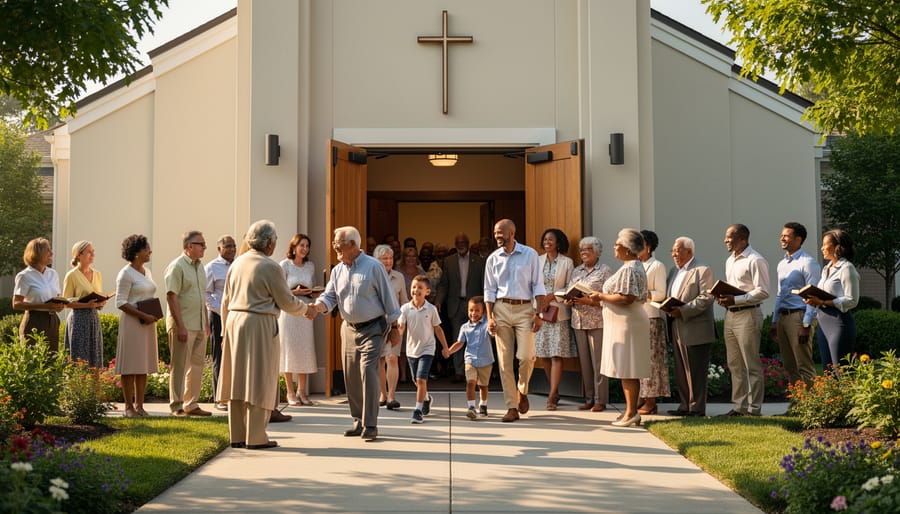
The same congregational governance structure houses dramatically different theological positions across American Christianity. While congregational polity defines how churches make decisions, it says nothing about what those churches believe, which means you’ll find congregational churches at every point on the theological spectrum.
Conservative Baptist churches operate with congregational governance while maintaining traditional evangelical theology: biblical inerrancy, salvation through faith in Christ alone, and conservative views on marriage and sexuality. These churches exercise their congregational autonomy to uphold historic Christian orthodoxy, selecting pastors who preach expository sermons and maintain doctrinal accountability to their conservative Baptist associations.
On the opposite end, the United Church of Christ embraces progressive theology within the same congregational structure. UCC congregations typically affirm LGBTQ+ inclusion, ordain women in all leadership roles, and interpret Scripture through contemporary social justice frameworks. Each UCC congregation remains free to determine its own theological stance, but the denomination’s overall trajectory leans toward theological liberalism.
Independent Bible churches demonstrate the theological middle ground. These congregations reject denominational affiliation entirely, using their autonomy to craft unique theological positions. Some maintain fundamentalist separatism, others practice charismatic worship, and still others blend evangelical doctrine with contemporary cultural engagement.
| Denomination/Type | Theological Position | Key Doctrinal Emphases |
|---|---|---|
| Conservative Baptist Association | Theologically Conservative | Biblical inerrancy, substitutionary atonement, believer’s baptism |
| United Church of Christ | Theologically Progressive | Social justice, full inclusion, open interpretation of Scripture |
| Independent Bible Churches | Varies Widely | Local determination of doctrine, biblical authority (interpreted differently) |
| Congregational Christian Churches | Moderate to Conservative | Historic creeds, freedom of conscience, Christ-centered community |
This diversity exists because congregational governance empowers each local body to determine its own theological convictions. The congregation selects pastors who align with their beliefs, approves doctrinal statements that reflect their understanding of Scripture, and exercises church discipline according to their interpretation of biblical teaching. Two congregational churches can use identical decision-making processes while arriving at completely opposite theological conclusions, one affirming women pastors based on Galatians 3:28, another restricting pastoral roles to men based on 1 Timothy 2:12.
The governance structure simply determines who makes these theological decisions: the gathered congregation rather than bishops, denominational boards, or hierarchical authorities. Whether those congregational decisions lean liberal or conservative depends entirely on the spiritual convictions of the members themselves.
Who Can Join or Lead in Congregational Churches: Membership and Eligibility
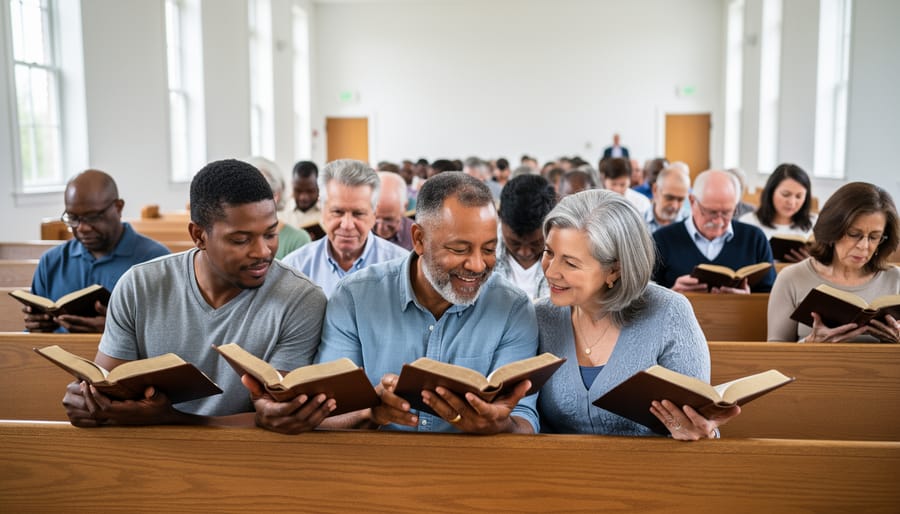
Membership and leadership in congregational churches operate on a beautifully simple principle: each local congregation determines its own standards. There’s no denominational headquarters dictating who can join or serve. This means two congregational churches in the same city might have quite different membership requirements, even if they share similar theological beliefs.
Most congregational churches establish membership through a process that reflects their specific convictions. A theologically conservative congregational church might require a detailed statement of faith agreement and believer’s baptism by immersion, while a more progressive one might have broader standards centered on commitment to the community rather than specific doctrinal positions.
The pathway to membership typically includes these elements:
- Profession of personal faith in Jesus Christ
- Baptism (mode and timing vary by congregation)
- Agreement with the church covenant or statement of faith
- Completion of a membership class covering church beliefs and governance
- Interview with church leadership or a membership committee
- Public reception before the congregation during a worship service
Voting privileges usually come with formal membership. In most congregational churches, only members can vote on major decisions like calling a pastor, approving the budget, purchasing property, or amending the church constitution. Some churches set additional requirements, such as a minimum age (often 18) or a waiting period after joining before gaining voting rights.
Leadership eligibility follows similar local autonomy. Each congregation defines qualifications for pastors, elders, deacons, and ministry leaders based on their interpretation of biblical standards in 1 Timothy 3 and Titus 1. Conservative congregational churches might restrict pastoral roles to men who meet specific theological criteria, while others open leadership to anyone displaying spiritual maturity and giftedness.
The beauty of this system is transparency. Before joining, you can examine the church’s constitution and bylaws to understand exactly what membership entails and how leaders are selected. This clarity helps ensure you’re entering a community whose governance practices align with your convictions.
How to Become Part of a Congregational Church and Participate in Its Governance
Joining a congregational church involves more than showing up on Sunday mornings. Because members share responsibility for the church’s direction, most congregational churches have a structured path toward membership that prepares you to participate in governance.
Your journey typically begins with regular attendance. Visit services for several weeks or months to understand the church’s teaching, worship style, and community. During this time, you’re welcomed as a visitor but won’t yet have voting privileges.
Most congregational churches require prospective members to complete a membership class. These classes usually run four to eight weeks and cover the church’s statement of faith, covenant, governance structure, and expectations for members. You’ll learn about the church’s history, doctrinal positions, and how decisions are made. This is your opportunity to ask questions and determine whether the church aligns with your convictions.
After completing the class, you’ll meet with church leadership, often the pastor and deacons or elders. They’ll discuss your testimony, faith journey, and readiness for membership. In churches practicing believer’s baptism, you may need to be baptized or provide evidence of prior baptism. Some congregations accept members by transfer if you’re coming from another church with a similar faith commitment.
The final step is public reception into membership, which typically happens during a Sunday service. The congregation votes to accept you as a member, and you may share a brief testimony or publicly affirm the church covenant. From that moment, you gain full participation rights, including voting on budgets, pastoral calls, and doctrinal matters.
Once you’re a member, you participate in church governance through regular business meetings, often quarterly or annually. You’ll receive advance notice and written materials about items requiring votes. Members can also bring concerns forward by submitting proposals to the deacons or leadership team, who present them to the congregation for discussion and decision.
The entire process ensures you understand what you’re joining and that the congregation welcomes you fully into shared responsibility for the church’s life and direction.
Rights and Responsibilities of Congregational Church Members
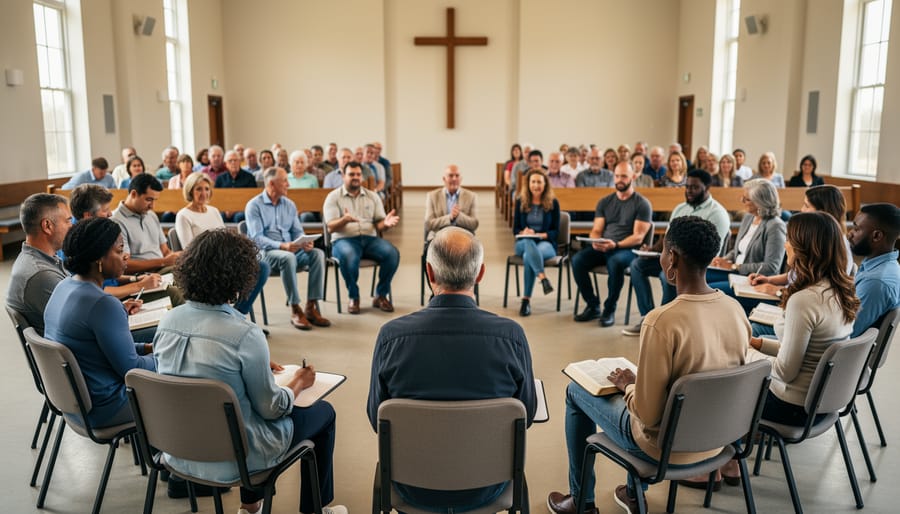
In congregational churches, membership carries both meaningful privileges and serious responsibilities rooted in the biblical principle of mutual accountability. When you become a member, you’re not simply joining an organization, you’re entering into a covenant relationship with other believers who share responsibility for the spiritual health and direction of your local body.
Your rights as a member typically include voting on all major decisions that shape the church’s future. This means you have a voice in calling or dismissing pastoral staff, approving the annual budget, authorizing building projects, and amending the church constitution. Most congregational churches grant full voting privileges to all members in good standing, though some may require a minimum membership period before voting on certain matters like pastoral transitions. You also have the right to attend and speak at business meetings, bring proposals before the congregation, and participate in church discipline processes when needed.
With these rights come corresponding responsibilities. Regular attendance demonstrates your commitment to the body, as Hebrews 10:25 encourages believers not to forsake “assembling together.” Financial support through tithes and offerings isn’t just about funding operations, it reflects your investment in the church’s mission and your trust in God’s provision.
Perhaps most importantly, you’re expected to pursue spiritual maturity and exercise wisdom in decision-making. This means prayer before votes, willingness to study issues thoughtfully, and prioritizing unity and biblical truth over personal preferences. Constructive participation requires speaking the truth in love, listening to fellow members with humility, and supporting decisions once the congregation has spoken, even when you personally disagreed.
Paul’s instruction to “bear one another’s burdens” (Galatians 6:2) captures the heart of congregational membership. Your participation isn’t about asserting individual rights but about stewarding shared responsibility for a community where Christ is honored and believers grow together.
How Clergy-Led Mediation Works in Congregational Conflicts
When disputes arise in congregational churches, pastors find themselves in a delicate position: they must guide the resolution process while respecting the congregation’s ultimate authority. Unlike hierarchical church structures where clergy can impose decisions from above, congregational pastors serve more as facilitators than arbiters, helping members work through disagreements while the congregation retains final decision-making power.
The foundation for clergy-led mediation lies in biblical principles outlined in Matthew 18:15-17, where Jesus prescribes a step-by-step approach: private conversation first, then involving witnesses, and finally bringing the matter before the church. In congregational settings, pastors typically shepherd this process, encouraging members to address conflicts directly before they escalate. They help disputing parties ask the right questions to understand underlying concerns rather than merely taking sides.
Deacons and elders often assist pastors in mediation, particularly when the conflict involves leadership decisions or doctrinal concerns. These lay leaders bring congregational perspective and can help ensure the process remains balanced. They may meet separately with involved parties, facilitate group discussions, or present findings to the broader membership when a church-wide vote becomes necessary.
Common conflicts in congregational churches include disagreements over worship style, budget priorities, ministry direction, and leadership selection. For instance, when a church splits over whether to hire a contemporary or traditional worship leader, the pastor might guide the congregation through a discernment process involving prayer, discussion forums, and ultimately a congregational vote. The pastor’s role is to maintain biblical focus and unity throughout, not to dictate the outcome.
When conflicts involve the pastor directly or when internal mediation fails, outside help becomes necessary. Values-based conflict particularly benefits from external mediators who can bring objectivity. Denominational leaders, conflict resolution ministries, or respected pastors from other congregations can facilitate dialogue without the complications of internal relationships. Some congregational churches establish conflict resolution procedures in their bylaws, specifying when and how outside mediation should occur.
The tension between pastoral leadership and congregational autonomy actually serves the church well when both parties approach conflict with humility and prayer. Pastors contribute wisdom and biblical guidance while respecting member voices; congregations benefit from pastoral experience while maintaining their responsibility before God for church direction.
Where to Get Help and Resources for Congregational Church Questions

When you have questions about congregational church governance, theology, or need guidance navigating church challenges, several trusted resources can help you grow in understanding and wisdom.
Start with prayer and Scripture. Before seeking external resources, ask the Holy Spirit for discernment (James 1:5) and study biblical passages on church life, including Acts 2:42-47, 1 Timothy 3, and Titus 1. God’s Word remains your primary guide for understanding how His church should function.
For denominational guidance, contact the headquarters or regional associations connected to congregational churches:
- Conservative Congregational Christian Conference (CCCC) offers resources on biblical congregationalism
- National Association of Congregational Christian Churches provides governance materials and church health assessments
- Independent church networks like the Southern Baptist Convention (congregational in practice) maintain resource libraries
- United Church of Christ resources explain progressive congregational governance
- Local pastoral associations connect you with experienced ministers who understand congregational polity
When facing church conflict, faith-based mediation ministries like Peacemaker Ministries and the Christian Conciliation Service of America provide trained mediators who understand congregational dynamics. These organizations help churches transform conflict into opportunities for spiritual growth through biblical principles.
Church governance consultants specializing in congregational polity can review your church’s constitution, train leaders, and facilitate difficult decisions. Many denominations offer these services at reduced cost to member churches.
For personal spiritual growth during church struggles, explore spiritual practices like contemplative prayer, Scripture meditation, and Christian counseling. Licensed pastoral counselors combine biblical wisdom with professional expertise to help you process church-related stress.
Remember that seeking help demonstrates spiritual maturity, not weakness. God works through His people to provide wisdom and peace.
How to Apply or Complete the Process
When you’re ready to join a congregational church, the process is typically straightforward and locally determined. Each congregation sets its own membership pathway, so your first step is to speak with a pastor or church leader about their specific requirements.
Most congregational churches follow a similar pattern. You’ll usually attend services for a period to ensure the church aligns with your beliefs and values. Many churches then require you to complete a membership class, sometimes called “new members’ class” or “inquirers’ class”, where you’ll learn about the church’s statement of faith, covenant, governance structure, and expectations.
After completing the class, you’ll meet with church leadership (often the pastor and deacons or elders) to discuss your faith journey and commitment to the congregation. Depending on the church’s tradition, you may be asked to share a testimony of faith publicly or answer questions about your Christian beliefs.
The formal membership process usually culminates in a congregational vote during a members’ meeting, though many churches make this a formality that honors the leadership’s recommendation. Some churches require baptism (either before or as part of membership), while others accept transfer of membership from a previous church.
Once accepted, you’ll receive full voting privileges and participation rights in church governance decisions.
Common Questions About Congregational Churches and Their Beliefs
Congregational governance raises practical questions for Christians evaluating churches or navigating membership. These frequent concerns reveal common misconceptions about how governance structures relate to theological stability.
Can congregational churches change their theology over time?
Yes, because the congregation holds final authority over doctrine, beliefs can shift as membership changes or as the church reconsiders its interpretation of Scripture. However, many congregational churches adopt statements of faith or covenants that require significant member consensus to amend, providing doctrinal stability.
Are congregational churches more prone to splits than other governance models?
Not necessarily. While the democratic process can surface disagreements publicly, hierarchical churches also experience divisions, they just happen differently. Congregational governance actually provides structured ways to address conflicts through member votes rather than letting tensions fester unresolved.
How do congregational churches maintain doctrinal consistency?
Through careful membership processes, regular teaching of core beliefs, elder or deacon oversight, denominational affiliations that provide accountability, and intentional discipleship that grounds members in Scripture. The priesthood of all believers requires an informed, biblically-literate congregation.
What happens when a congregation disagrees with pastoral leadership?
The congregation can vote on the matter, request outside mediation, call a special church meeting, or in serious cases, vote to dismiss the pastor. This accountability works both ways, pastors also have the freedom to resign if the congregation moves in a direction contrary to their biblical convictions.
The relationship between congregational churches and denominations varies widely. Some remain completely independent with no outside affiliation. Others belong to associations or conventions that provide resources, missionary support, and theological fellowship while respecting local autonomy. These denominational ties often include statements of faith that member churches voluntarily affirm, creating shared doctrinal ground without enforcing uniformity on every interpretive detail.
Biblical soundness in congregational churches depends on the same factors as any church structure: faithfulness to Scripture, commitment to sound teaching, spiritual maturity of leadership, and the Holy Spirit’s work in the community. Acts 6 shows the early church making collective decisions about practical matters, while the Bereans in Acts 17:11 examined Scripture daily to verify teaching, both practices that align well with congregational principles when applied with wisdom and humility.
Understanding that congregational governance describes how a church makes decisions, not what it believes, frees you to look beyond labels and focus on what truly matters. A church’s polity tells you who votes on the budget or calls a pastor, but it doesn’t reveal whether that congregation upholds biblical authority, preaches the gospel faithfully, or lives out Christ’s love in tangible ways.
As you search for a church home or seek to understand your current congregation better, examine the fruit rather than the framework. What does this church teach from Scripture? How do members treat one another and serve their neighbors? Does leadership demonstrate humility and accountability? These questions matter far more than whether decisions happen through congregational vote, elder boards, or denominational structures.
God calls us to be part of a local body where we can grow in faith, serve others, and worship together. That church might be congregational, presbyterian, or episcopal in governance, the structure itself isn’t what transforms lives or advances the kingdom. What matters is that believers gather around God’s Word, honor Christ in their worship, and reflect His character in their relationships.
Approach your search with prayer and discernment. Visit churches, ask thoughtful questions about their beliefs and practices, and observe how they embody the gospel in community. Trust that the Holy Spirit will guide you toward a congregation where you can both contribute and be nurtured in faith, regardless of how they structure their decision-making.