
God’s miraculous healing is the restoration of a person’s body, mind, or spirit through God’s direct action, in a way that goes beyond what ordinary means can explain. It is a gift of grace, not a reward earned by strong faith or a formula to be performed. From the sick who reached for Jesus’ cloak to the believers who prayed over the ill in the early church, Scripture shows healing as a sign of God’s compassion and a glimpse of the wholeness he promises to all creation.
For pastors, chaplains, and caregivers, the real challenge is rarely whether God can heal. It’s how to speak about healing with honesty and tenderness when one person recovers and another doesn’t, and how to read the Gospel accounts without handing a grieving family false promises or quiet guilt. Christians across many traditions hold different views on how and when God heals today, and there is room for that diversity at the bedside.
This article offers a clear definition, a responsible way to read the biblical healing stories, the main kinds of healing Christians recognize, and practical guidance for caring for people in pain with hope that doesn’t overpromise.
What God’s Miraculous Healing Means
When we speak of God’s miraculous healing, we mean His compassionate, supernatural restoration of a person’s body, mind, or spirit. It is God stepping into human weakness with care, sometimes in ways we can explain and sometimes in ways we cannot. Scripture shows this from Moses’ day to the ministry of Jesus and the early church, always pointing back to a God who sees people in pain.
To read these accounts well, we need a little help from a word you may hear in Bible studies: hermeneutics. Simply put, it is the practice of reading Scripture faithfully in its context, asking who was speaking, who was listening, and what the passage reveals about God. If you’d like a fuller walk-through, explore the core principles of hermeneutics.
Here are a few terms that will guide us:
- Miracle
- An act of God that goes beyond ordinary explanation and reveals His power and love.
- Healing
- The restoration of what has been broken, whether in body, mind, spirit, or relationships.
- Hermeneutics
- The careful, prayerful way of interpreting Scripture in its original setting so it can speak to us today.
- Pastoral care
- The ministry of walking beside people in illness, grief, and hardship with prayer, presence, and Scripture.
- Wholeness (shalom)
- The Hebrew idea of peace and completeness, where a person is well in every part of life.
This kind of reading matters for pastors, chaplains, small group leaders, and caring friends. It keeps us from turning a healing story into a formula and helps us offer hope without pressure. It lets us sit with someone at a bedside and speak with gentleness and humility.
It’s also worth saying plainly that Christians hold a range of views on healing today. Some expect dramatic answers to prayer, others emphasize medicine and patient endurance, and many hold both together. This article honors that diversity, trusting that each tradition has wisdom to share.
How Healing Miracles in Scripture Are Read and Understood
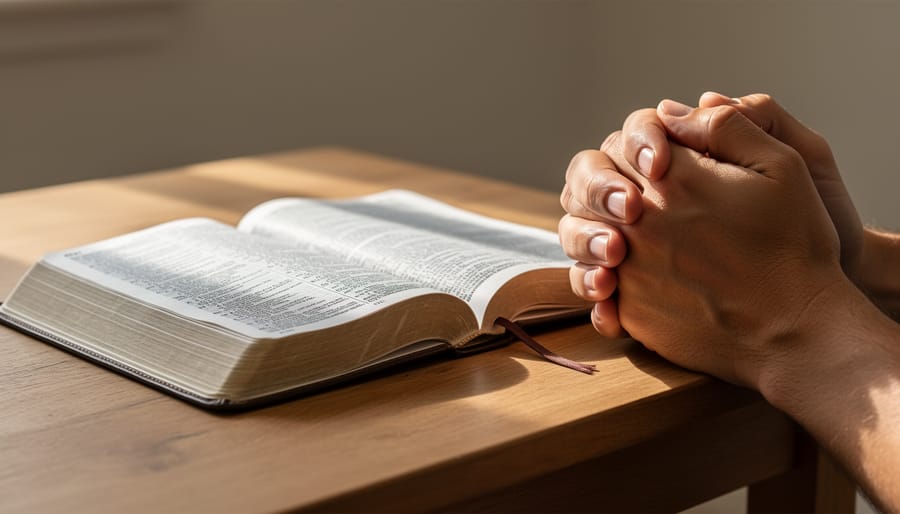
Reading Healing Stories in Their Setting
Every healing story in Scripture happens somewhere, to someone, for a reason. When we slow down and notice the setting, the story opens up in ways a quick reading can miss. Paying attention to biblical context helps us hear what the text is actually saying instead of what we assume it says.
Take the paralyzed man in Mark 2:1-12. His friends tear open a roof to reach Jesus, and the first thing Jesus says is, “Son, your sins are forgiven.” Only after that does he tell the man to rise and walk. The healing is real, but the story is also about who Jesus is: the one with authority to forgive and to restore.
The woman in Luke 8:43-48 had bled for twelve years. Under the law of her day, that kept her isolated. When she touched Jesus’ cloak, he stopped, looked for her, and called her “daughter.” Her body was healed, and so was her place among her people.
Then there is Naaman in 2 Kings 5, a foreign commander told to wash in the Jordan. His healing came through humility and an unexpected word from God, not through status or spectacle.
Notice that none of these accounts hands us a formula. Each one is different, yet each shows God caring for the whole person: body, heart, and belonging. They invite us to trust the Healer rather than copy a method.
Holding Mystery, Faith, and Compassion Together
Not every prayer for healing ends the way we hope, and that can leave us confused or quietly ashamed. Scripture doesn’t hide this tension. Paul pleaded three times for his “thorn in the flesh” to be removed, and the answer he received was not relief but presence: “My grace is sufficient for you, for my power is made perfect in weakness” (2 Corinthians 12:9). God was not absent from Paul’s suffering. He was right there in the middle of it.
Job’s story tells us something similar. His friends were quick to explain his pain, hinting that hidden sin must be the cause. In the end, God rebuked their certainty rather than Job’s honest questions. And the Psalms of lament, like Psalm 13 and Psalm 88, give us permission to bring our grief, even our confusion, straight to God. Prayer can be raw and still be faithful.
When we read healing accounts, it helps to protect biblical truth from the well-meaning but harmful idea that a lack of healing signals a lack of faith. Nowhere does Scripture measure faith by outcomes. It measures faith by trust, and trust can live alongside unanswered questions.
So when someone near you is hurting and healing hasn’t come, resist the urge to explain it. Sit with them, pray with them, and remind them that God is close to the brokenhearted. Mystery doesn’t cancel compassion. Often, it is exactly where compassion does its best work.
Different Ways Christians Understand Healing

When Christians talk about God’s healing, they often mean different things, and that’s okay. Scripture itself shows a wonderfully wide picture of restoration, and different churches have treasured different parts of it. Here are the main types of healing we see in the Bible and in Christian life:
- Physical healing: Jesus restores Peter’s mother-in-law from fever (Matthew 8:14-15).
- Emotional and mental restoration: God draws near to those with heavy hearts (Psalm 34:18).
- Spiritual renewal: God binds up the brokenhearted and renews the soul (Psalm 147:3).
- Relational reconciliation: Broken bonds are mended through forgiveness (2 Corinthians 5:18-19).
- Ultimate healing in the resurrection: God wipes away every tear and ends death and pain (Revelation 21:4).
You may notice that some traditions lean strongly toward one or two of these. Pentecostal and charismatic communities often emphasize prayer for physical healing and expect God to move in visible ways. Many Anglican, Catholic, and Orthodox churches offer anointing with oil and sacramental care, joining prayer with the comfort of ritual. Others, such as Reformed and Baptist congregations, may highlight God’s sovereignty and the deep spiritual healing found in the gospel, while also praying earnestly for the sick. Pastoral counseling ministries often focus on emotional wholeness, reminding us that the mind and heart matter to God too.
None of these emphases cancels out the others. Each tradition carries wisdom the rest of us can learn from. Taken together, they remind us that God cares for the whole person, body, mind, spirit, and relationships, and that our final hope rests in the promise that all things will be made new. Holding these categories side by side helps us pray and care for people with open hands and a generous heart.
How Healing Accounts Are Used in Pastoral Care

Choosing Passages That Comfort and Encourage
When someone is hurting, the right verse at the right moment can feel like a warm hand on the shoulder. As you learn to apply hermeneutics with care, you will notice that some passages fit certain seasons better than others.
Psalm 23 is a gift in hospital rooms and long nights of waiting. It doesn’t promise a quick fix. It says the Shepherd walks with us “through the valley,” and that nearness is often what a frightened person needs most.
Isaiah 41:10 (“Do not fear, for I am with you”) speaks to anxiety before a diagnosis, a scan, or a surgery. It is short enough to whisper and easy to remember when words run thin.
James 5:14-16 shows the church gathering around the sick with prayer and anointing. It suits moments when a family wants to pray together, and it reminds us that healing is a community act, not a solo burden.
Philippians 4:6-7 offers peace “that surpasses understanding,” which can comfort those living with chronic illness, where the answer may not come soon.
Whichever passage you choose, read it slowly and gently, and leave room for silence. Let the person set the pace.
Words to Offer and Words to Avoid
When someone is hurting, a few well-chosen words can do more than a long explanation. Try offering simple, honest presence: “I’m so sorry you’re walking through this,” “God is near to you right now,” or “I’d be glad to pray with you, if that would help.” These phrases validate pain without trying to fix it. They also leave room for tears, silence, and questions.
Be careful with statements that sound hopeful but carry a hidden weight. Avoid saying “You just need more faith,” “Maybe there’s sin in your life,” or “Everything happens for a reason.” Such words can leave a suffering person feeling blamed on top of being sick. Scripture shows us a God who draws close to the brokenhearted, never one who scolds them for their pain.
If you want a gentle companion for these conversations, the Bible’s message of healing and hope reminds us how much words matter. Let yours be kind, patient, and full of grace.
How God S Miraculous Healing Works

Scripture does not give us a formula for how God heals, and that is part of the point. What it gives us is a picture of who is acting. In every healing account, the initiative belongs to God, whether he heals through a spoken word, a touch, a prayer of the elders, or the simple passing of time and good medical care.
Notice the patterns that do appear. God often works through ordinary means: Jesus used his hands, Paul’s friend Luke was a physician, and James invites the sick to call for the church’s prayers and anointing with oil. Faith matters in many stories, yet it is rarely a technique. The paralyzed man’s friends simply carried him to Jesus.
Healing also unfolds in different timelines. Some restoration is immediate, some gradual, and some arrives only in the resurrection. Because God’s methods remain his own, we pray with hope, receive what he gives with gratitude, and trust his care when the answer looks different than we asked.
Common Questions About God’s Healing
Many believers carry quiet questions about healing, and it’s okay to ask them out loud. Here are a few of the most common, answered with care for the different ways Christians understand them.
Does God still heal today?
Many Christians affirm that God, who healed throughout Scripture, remains the compassionate Healer today, and James 5:14-16 invites us to pray for the sick. Traditions vary in how they describe this, but nearly all agree that God is able and that prayer is always welcome.
Why are some people healed and others not?
Scripture doesn’t give us a full answer, and it’s wise to stay humble here. Paul’s thorn in the flesh (2 Corinthians 12:7-10) reminds us that God’s grace can meet us even when the relief we prayed for doesn’t come.
Is lack of healing a sign of weak faith?
No. The Psalms of lament and the story of Job show faithful people who suffered deeply, and Jesus never measured faith by outcomes. Please set aside any blame, whether it’s aimed at yourself or at someone else.
Can medical care and prayer work together?
Yes, and many believers see doctors, nurses, and treatments as gifts from God. Praying while following your care team’s guidance is a faithful, whole-hearted way to seek healing.
If you’re sitting with someone whose healing hasn’t come, you don’t need perfect words. Your steady presence, a listening ear, and a short, gentle prayer often mean more than any explanation. Offer to bring a meal, drive them to an appointment, or simply stay a while, and let them know God is near in the waiting. Love shown in small, practical ways is itself a kind of ministry of healing.
At the heart of it all, God is the compassionate Healer. He draws near to the hurting, whether healing comes in a moment, over many years, or in the fullness of the resurrection. Reading Scripture with care, in its setting and with humility, keeps us from turning beautiful stories into formulas. It frees us to comfort people instead of pressuring them, and to love them well in the very place where they are.
You don’t need to have every answer to be a faithful presence. You only need to be willing to show up.
So consider taking one small step this week. Pray with a friend who is facing illness. Send a note to a caregiver who is tired. Or sit quietly with one of the healing passages we explored, like Psalm 23 or James 5:14-16, and ask God what it says about his care for you. If you’d like to go deeper, the Bible study resources from Key Way Canada are a gentle place to keep exploring these stories alongside others.
None of us walks this road alone. As you continue the journey, take this promise with you:
“He heals the brokenhearted and binds up their wounds.” (Psalm 147:3)
May you rest in his nearness, carry his comfort to others, and find fellow travelers in community who will walk with you every step of the way.