
A Christian divorce support group is a regular gathering, led by trained facilitators or experienced peers, where people walk through the pain of divorce together using prayer, Scripture, and honest conversation. Most meet weekly or every other week, last about 90 minutes, and are free or low-cost. Finding one usually takes a single phone call or email to a local church, and you don’t need to be a member to attend.
If you’re reading this, you may be carrying a grief that few people around you fully understand. Divorce can feel like losing a spouse, a home, a future, and sometimes a sense of belonging at church all at once. Friends mean well, but they often don’t know what to say. A good group fills that gap. You’ll sit with others who’ve faced the same sleepless nights and the same hard questions, and who won’t flinch when you ask them.
Scripture tells us, “The Lord is close to the brokenhearted and saves those who are crushed in spirit” (Psalm 34:18). Many people find that closeness most clearly through other believers who simply show up. This guide explains what these groups offer, the formats available, and how to find and join one, including what to expect at your first meeting. Whether you’re healing yourself or supporting someone you love, there’s a place for you.
What a Christian Divorce Support Group Actually Is
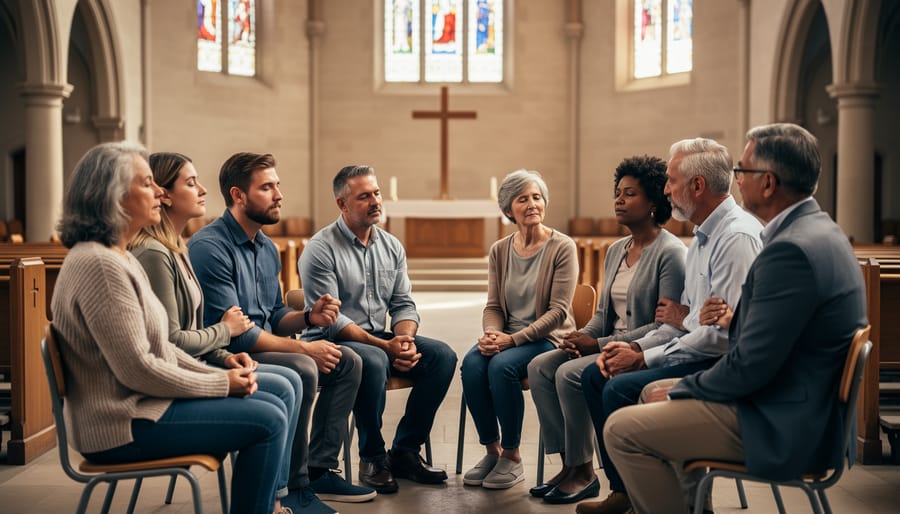
A Christian divorce support group is a small, confidential gathering where people walking through separation or divorce meet regularly to pray, reflect on Scripture, and share honestly with one another. Think of it as a circle of fellow travelers who understand the road because they’re on it too.
It helps to see how this differs from other places you might turn. Individual Christian counseling is one-on-one work with a trained professional who offers clinical tools and personal attention. A secular support group can offer real understanding, but it won’t weave prayer and biblical hope into the conversation. A typical church small group is built around general fellowship or study, so the unique grief of divorce may not be its focus. A divorce support group is shaped specifically for this season, with a rhythm of prayer, a Scripture reflection, and time to share, always at your own pace.
Confidentiality matters here. What’s said in the room stays in the room, which is what lets people be real about anger, shame, loneliness, and doubt.
These groups also work alongside professional care rather than replacing it. Many people find that faith and therapy complement one another, and a group can be a steady source of community while a counselor helps with deeper needs.
You’re welcome no matter your church background or how your marriage ended. Christians from every tradition sit in these circles, and no one is there to judge.
How These Groups Help You Heal
Finding Comfort in Shared Stories
Picture a woman we’ll call Ruth. After her divorce, she stopped going to Sunday services. She told herself she was too busy, but the truth was quieter and heavier: she felt ashamed. Every conversation in the church lobby seemed to circle around happy marriages, and she was sure everyone could see the word “failure” stamped on her.
A friend finally invited her to a divorce support group meeting at a nearby church. Ruth almost turned the car around twice. Inside, she found a circle of ordinary people holding paper cups of coffee. When one man described sitting alone in his kitchen, unable to eat dinner, Ruth felt her throat tighten. She had done the same thing just the night before.
She didn’t say much that first evening. She didn’t have to. Simply hearing her own unspoken thoughts come out of someone else’s mouth was a relief she hadn’t expected.
That is often the quiet gift of a group. Shame thrives in isolation, but it loses its grip when we are heard by people who have walked a similar road. Galatians 6:2 reminds us to “carry each other’s burdens,” and in a circle like this, that promise becomes something you can feel.
Leaning on Scripture When Life Feels Broken

When your marriage ends, even familiar verses can feel distant. In a Christian divorce support group, Scripture isn’t used to hurry you past the pain. It’s read slowly, together, with room for honest questions.
Many groups begin with grief. Psalm 34:18 says, “The Lord is close to the brokenhearted and saves those who are crushed in spirit.” Notice that it promises nearness, not a quick fix. Members often find that simply naming their sorrow aloud, with this verse as a backdrop, loosens its grip. If you’d like to go deeper on your own, this guide to biblical grief support can be a gentle companion between meetings.
Anger and hurt are welcome here too. Psalm 147:3 reminds us that God “heals the brokenhearted and binds up their wounds.” Groups tend to treat forgiveness as a journey rather than a deadline. Some weeks it may mean simply asking God for the willingness to let go, and that’s enough.
Divorce can also shake your sense of who you are. Isaiah 41:10 speaks right into that: “Do not fear, for I am with you; do not be dismayed, for I am your God.” Many members begin to see that their worth rests in being loved by God, not in a marital status.
A simple practice to try: choose one verse each week, write it on a card, and carry it with you. Read it slowly when the evening feels longest.
Types of Divorce Support Groups to Consider
Divorce support comes in several shapes, and no single format is “the right one.” Many people find that what helps most changes as their season of life changes. Here are the main options you’ll likely come across, across many Christian traditions.
Church-based ministries are often the first stop. Many congregations host structured, multi-week programs, such as DivorceCare-style groups, that pair video teaching with discussion and prayer. Smaller groups led by a pastor or a trained lay leader tend to feel more informal, like gathering around a kitchen table with people who care. Counselor-facilitated groups add a licensed professional to the mix, which can be a comfort if your grief feels heavy or complicated. Online groups open the door for those in rural areas, those with unpredictable schedules, or anyone who isn’t ready to walk into a room of strangers just yet.
| Group Type | Typical Setting | May Suit Best | Key Consideration |
|---|---|---|---|
| Church-based program | Local congregation, weekly sessions | Those wanting structure and a set curriculum | Often runs in fixed multi-week cycles |
| Pastor or lay-led small group | Church room or a private home | Those who prefer a relaxed, personal feel | Leaders may not have formal counseling training |
| Counselor-facilitated group | Counseling office or ministry center | Those working through deep grief or trauma | May involve a fee |
| Online or virtual group | Video call or private forum | Those with limited time or mobility, or who live far from a group | Check how privacy is protected |
Beyond format, some groups focus on a particular need. Single parents can find encouragement and practical tips for raising children through change. Others center on helping kids process the divorce, or on supporting a friend or family member who is walking through it. Men’s and women’s groups can offer a space where it feels easier to speak openly.
Whichever you explore, you’re welcome to try more than one. Proverbs 27:17 reminds us that “iron sharpens iron,” and the right community can help you find your footing again.
How to Find the Right Group Near You or Online
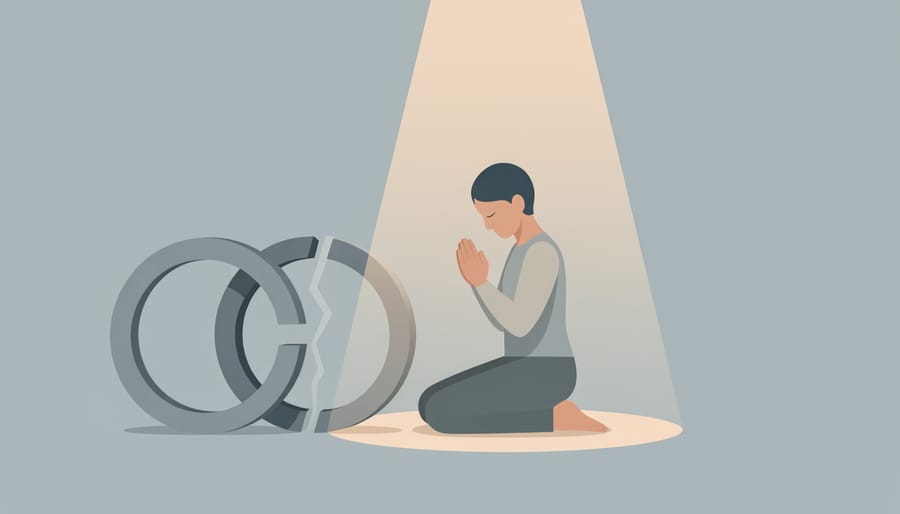
The best place to begin is the one closest to you. If you have a church home, ask your pastor or ministry leader whether a divorce recovery group meets there, or whether they can point you to one nearby. Many pastors keep a quiet list of trusted resources, and they’ll understand why you’re asking.
If your own church doesn’t offer a group, look wider. Churches of other traditions often host programs open to the whole community, and you don’t need to be a member to attend. A quick call to a few churches in your area can turn up options you’d never find online.
Christian counselors are another good connection. Many know which local groups are well led and which ones suit particular needs, such as single parents or those still in the middle of separation. Community bulletin boards, local Christian directories, and ministry network websites can also help.
Online groups are a real gift if you live in a small town, have a tight schedule, or simply aren’t ready to walk into a room of strangers. Video-based meetings and private discussion groups let you take part from home.
Before you commit, a few questions are worth asking:
– How is confidentiality protected, and what is expected of members?
– Who leads the group, and what is their training or experience?
– How large is the group? Smaller circles often make it easier to open up.
– Is there a cost for materials or a registration fee?
– Is the group open, so you can join anytime, or closed, with a set start date and a committed group of members?
Finally, give yourself permission to look around. The first group you visit may not feel quite right, and that’s okay. Different leaders, rhythms, and personalities matter more than people expect. As Psalm 34:18 reminds us, the Lord is close to the brokenhearted, and the right community is out there waiting for you.
What to Expect at Your First Meeting
Walking into a room of strangers can feel daunting, especially when you’re hurting. Feeling nervous is completely normal, and most people in the circle felt exactly the same way at their first meeting.
Most groups follow a gentle, predictable rhythm. You’ll be welcomed at the door, and the leader will offer a quick round of introductions (first names are usually enough). An opening prayer follows, setting a calm and caring tone. Next comes a short teaching or Scripture reflection, often on themes like grief, forgiveness, or rebuilding hope. Then there’s time for sharing, which is always optional. You might hear a healing conversation unfold as members listen and respond with kindness rather than advice. The evening closes with prayer.
You are free to simply listen. Many people say nothing at their first meeting, and that’s perfectly fine. Confidentiality is expected, so what’s shared in the room stays in the room.
Be gentle with yourself before and after. Rest, eat something, and consider keeping a quiet hour afterward to process what you heard. Remember Psalm 34:18, “The Lord is close to the brokenhearted.”
A support group is a wonderful companion, but it isn’t a substitute for professional care. If grief feels unrelenting, you struggle to sleep or function, or you have thoughts of harming yourself, please reach out to a licensed Christian counselor or your doctor. Asking for that help is an act of wisdom and courage.
Common Questions About Divorce and Christian Support Groups
Many people hesitate before walking into their first meeting, and that’s completely understandable. These are the questions we hear most often, answered with care.
Will I be judged for my divorce?
These groups exist because divorce is painful, and leaders are trained to offer grace, not criticism. You’ll find people from many circumstances and backgrounds, and no one is there to assign blame.
Do I have to be a church member to attend?
Most groups welcome anyone, whether you attend that church, another one, or none at all. If you’re unsure, a quick call to the group leader will settle it.
Are these groups free?
Many are free or ask only for a small amount to cover workbooks or materials. Groups led by a counselor may charge a fee, so ask about cost before you commit.
Can a support group replace counseling?
Not really. A group offers community and encouragement, while a licensed Christian counselor can help you work through deeper grief, trauma, or depression one-on-one. Many people find the two work beautifully side by side.
Two more worries come up often. If your faith feels shaken, you’re not alone. Doubt and anger are honest parts of grief, and the psalmists voiced both freely. Groups tend to make room for people at every stage of their faith journey, and you never have to pretend to be further along than you are. If your former spouse attends the same church, it’s wise to raise that privately with the leader first. Many ministries can point you to another group or an online option so you feel safe.
As for how long to stay, there’s no set timeline. Some programs run for several weeks, while others are ongoing, and many people stay until they feel steady, then return later to encourage someone newer to the road. Healing rarely follows a schedule, so go at the pace that serves you.
Healing after divorce doesn’t happen overnight, and it rarely follows a straight line. But it is possible, and you don’t have to walk that road alone. God meets people in every season, including the ones that feel broken, and Jesus’ compassion reaches you right where you are today.
You don’t need to have everything figured out. Just choose one small step. Maybe that’s sending a message to your pastor, visiting a group this week, or opening your Bible to Psalm 34:18 and letting those words settle in. Any of these is enough for now.
When you’re ready for more, Key Way Canada offers Bible study, prayer, and community resources to support you along the way.
May you hold onto this promise: “May the God of hope fill you with all joy and peace as you trust in him, so that you may overflow with hope by the power of the Holy Spirit” (Romans 15:13).