
The evolution of the church is the story of how the Christian community grew from a small band of believers meeting in homes after Jesus’ resurrection into the worldwide, many-voiced body of Christ we see today. It follows the church across two thousand years, through house gatherings, great councils, reformations, missionary journeys, and modern movements, while the heart of the faith stayed the same: following Jesus together.
Why does this matter? Because understanding where the church has been helps us appreciate where we belong. Many believers worship in traditions that look quite different from one another, yet each one traces its roots back to the same early followers who broke bread, prayed, and shared life together in Acts 2:42. Knowing that history can bring a deeper sense of gratitude and unity, and it can make Sunday morning feel like part of something much larger than one building or one generation.
In this article, we’ll walk through the major seasons of church history in plain language, look at the different forms and parts of church life, and consider practical ways to apply these lessons in your own faith journey. Whether you’re new to the faith or have sat in the same pew for decades, there’s something here to encourage you.
What the Evolution of the Church Means
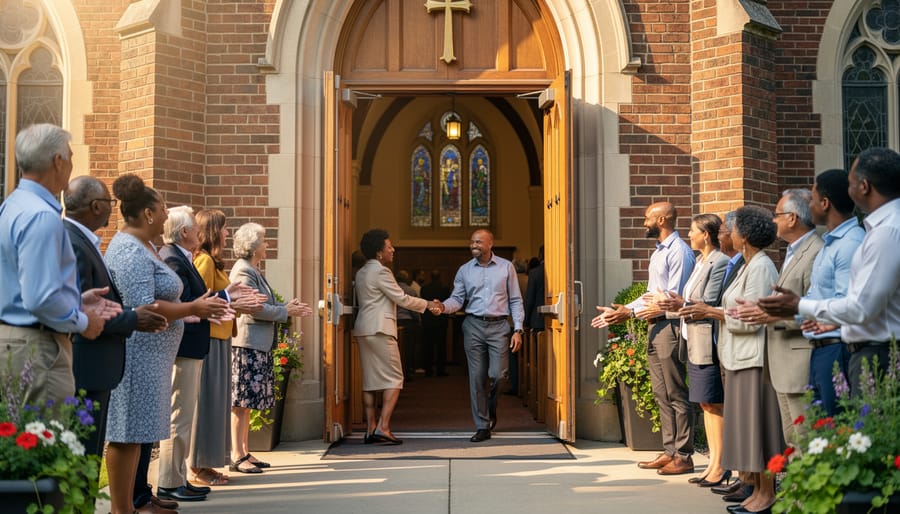
When Jesus told Peter, “I will build my church, and the gates of Hades will not overcome it” (Matthew 16:18), he wasn’t talking about bricks or steeples. The Greek word he used, ekklesia, means a gathered people. Paul says the same thing when he calls believers “God’s household,” built together into a dwelling place for the Spirit (Ephesians 2:19-22). Some teachers describe this as the church built on Peter’s confession that Jesus is the Christ. So the church is first a people, and the evolution of the church is the story of that people across time.
Here, “evolution” means growth in how believers gather, organize, and reach out. It does not mean the Gospel itself changes. A few plain-language terms help:
- Church (ekklesia)
- The people called out and gathered by Christ, wherever and whenever they meet.
- Congregation
- The local group of believers who worship and serve together.
- Denomination
- A family of congregations that share a name, history, and way of organizing.
- Tradition
- The customs and practices a group of believers has handed down over generations.
- Apostolic
- Rooted in the teaching of the apostles, the first witnesses of Jesus.
- Reformation
- The sixteenth-century movement that sought to renew the church by returning to Scripture.
Some things never move: Christ as head of the church, the authority of Scripture, love for God and neighbor, and worship. Others have shifted with time and culture, like the languages we pray in, the music we sing, the buildings we meet in, and how leaders are chosen. Hebrews 13:8 reminds us that “Jesus Christ is the same yesterday and today and forever,” even as his people express their faith in new ways.
Picture a family tracing their congregation’s roots. They begin with a small country chapel, then find a church that once met in a living room, and eventually discover a prayer circle from a century before that. The faces, hymns, and rooms changed, but the same Lord gathered them each time. That’s the heart of this story: a living people held together by an unchanging Savior.
How the Church Has Grown and Changed: From Pentecost to Today
The Church Born in Scripture: Acts and the Early Believers

When we turn to the book of Acts, we find the church in its earliest and simplest form. After Pentecost, the first believers “devoted themselves to the apostles’ teaching and to fellowship, to the breaking of bread and to prayer” (Acts 2:42). There were no buildings to maintain and no formal programs. They gathered in homes, shared meals with glad and sincere hearts, and met each other’s needs. Those who had more gave freely so that no one went without (Acts 2:44-45).
If you’re curious about what the first church did day to day, the answer is wonderfully ordinary: they learned, ate, prayed, and cared for one another. Day by day, the Lord added to their number.
From Jerusalem, the Gospel travelled through the apostles and then through Paul, who planted young congregations across the Roman world. When he wrote to the believers in Corinth, he offered an image that still speaks to us: “Just as a body, though one, has many parts, so it is with Christ” (1 Corinthians 12:12). Every member mattered, whether gifted in teaching, serving, or encouraging.
That is where the church’s story begins: not with a structure, but with a people held together by Christ.
From Persecution to Public Worship: The Early and Medieval Centuries
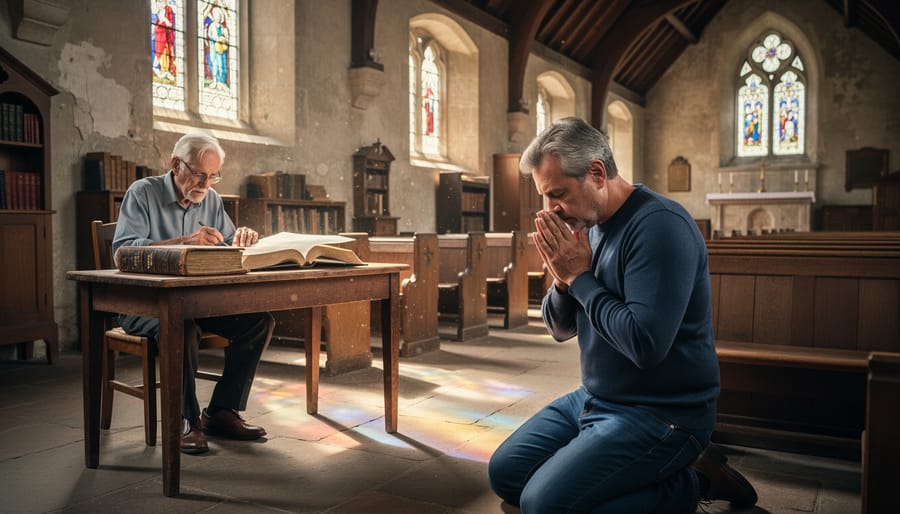
In the centuries after the apostles, many believers faced real hardship. Gathering to worship could cost them their homes, their livelihoods, and sometimes their lives. Yet the church kept growing, often quietly, as families met in homes and hidden spaces, strengthened by prayer and the promise of Jesus in Matthew 5:10-12. When the Roman Empire eventually ended its official hostility toward Christians, congregations could meet openly and build places set apart for worship.
During these same years, the churches carefully gathered and copied the apostolic writings. Letters and Gospels that were already treasured and read aloud in congregations came to be recognized as the New Testament, a gift preserved by faithful hands. Gatherings of church leaders also produced creeds, short statements of faith that helped far-flung communities confess the same Lord and stay united.
In the medieval centuries, monastic communities became living lamps. Monks and nuns of many traditions copied Scripture by hand, prayed through the Psalms each day, and offered hospitality to travelers. Whatever our own tradition, we can give thanks for their devotion. They remind us that God’s Word endures, just as Isaiah 40:8 promises.
Renewal and Reformation: Bringing the Bible to Everyday People
For many centuries, most ordinary believers heard Scripture in a language they did not speak at home. That began to change as faithful men and women worked to put God’s Word into the languages of everyday life. The rise of Bible translation into English, German, and many other tongues meant a farmer or a mother could finally read the Gospels for herself.
The printing press, developed in the 1400s, carried this gift much further. Bibles that once took months to copy by hand could now reach homes, schools, and village churches. Families gathered around the page and found the promise of Psalm 119:105 for themselves: “Your word is a lamp to my feet and a light to my path.”
Renewed attention to Scripture stirred many movements of reform and revival. Out of them grew the rich variety of Christian traditions we know today, such as Lutheran, Reformed, Anglican, Baptist, Methodist, and Pentecostal. Each tradition carries its own gifts, whether in worship, teaching, service, or prayer. We can give thanks for all of them, trusting that the same Spirit has been at work in each.
A Global, Growing Church in the Modern Era
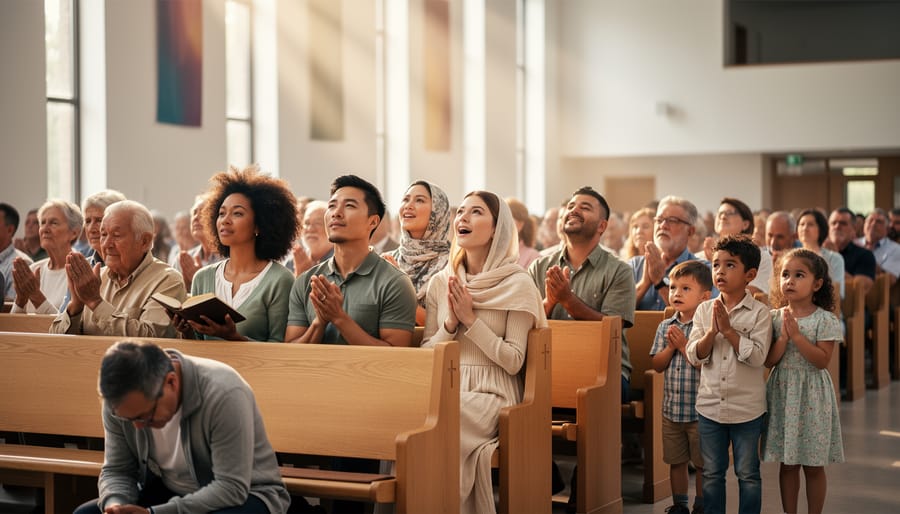
Over the last few centuries, the church has stretched far beyond the places where it once felt most at home. Missionary movements carried the Good News across oceans and into villages, often at great personal cost. Believers translated Scripture into hundreds of languages so people could hear God’s Word in the tongue of their own hearts. Today, some of the fastest-growing Christian communities are found in Africa, Asia, and Latin America, and Jesus’ promise in Acts 1:8 to be His witnesses “to the ends of the earth” looks more real than ever.
Closer to home, the church takes many shapes. Some families gather in living rooms, much like the believers in Acts 2:46, sharing a meal, a Bible reading, and prayer. Many congregations treasure being multi-generational, where grandparents, parents, and children worship side by side and learn from one another. Others join online worship, which has brought church into hospital rooms, remote communities, and the homes of those who cannot travel.
The setting may change, but the heart stays the same. Revelation 7:9 pictures a multitude from every nation, tribe, people, and language standing before the throne. Wherever you live and however you worship, God is still at work, gathering His people in every culture and language.
The Many Faces of the Church: Forms, Traditions, and Expressions
When we talk about the church, Scripture uses more than one picture. Paul describes the universal body of Christ, every believer across every age and place, joined to Jesus as the head (1 Corinthians 12:12-13; Colossians 1:18). Then there is the local congregation, the specific gathering of neighbors who meet, pray, and serve together, like the churches Paul wrote to in Corinth, Ephesus, and Philippi. Both are the church, and each makes the other real: the local family is where the worldwide body becomes personal.
Over the centuries, traditions have organized the life of these gatherings in different ways. Some follow a liturgy with set prayers and readings, while others lean toward spontaneous worship and extended preaching. Some are led by bishops, others by elders, pastors, or the congregation itself. Many celebrate sacraments, and others speak of ordinances, but nearly all hold baptism and the Lord’s Supper close to the heart. These differences grew out of time, language, and culture, and each tradition has carried real gifts of faithfulness and wisdom. None needs to be ranked above another to be loved.
Across all these expressions, certain threads run through the church from Acts to today:
- Worship: gathering to praise God in spirit and truth (John 4:24).
- Teaching of Scripture: learning and handing on the apostles’ teaching (Acts 2:42).
- Prayer: bringing every need and thanksgiving to God together (Philippians 4:6).
- Fellowship: sharing life, meals, and burdens with one another (Galatians 6:2).
- Service to others: caring for neighbors in Christ’s name (Matthew 25:40).
- Sharing the Gospel: carrying the Good News to every nation (Matthew 28:19-20).
You may find these practices in a candlelit cathedral, a small rural chapel, or a living-room gathering, shaped differently but carrying the same heart. Paul captures this beautifully: “There is one body and one Spirit… one Lord, one faith, one baptism; one God and Father of all” (Ephesians 4:4-6). Jesus himself prayed that his followers would be one, “so that the world may believe” (John 17:21).
That prayer is a gentle invitation. We do not have to look or worship alike to belong to the same family. Growing in Christian unity begins with curiosity and gratitude, asking what we can learn from a sister or brother whose worship looks different from ours, and rejoicing that the same Lord is honoured in every language and every style.
How Understanding Church History Strengthens Your Faith Today
Knowing how the church grew gives your own faith deeper roots. Here are a few ways to put that history to work.
Draw courage from those who came before. Early believers faced hardship, yet they kept gathering, praying, and sharing the Good News. When your own season feels heavy, remember Hebrews 12:1, which speaks of being surrounded by “such a great cloud of witnesses.” Their perseverance is a quiet reminder that God was faithful then and is faithful now.
Appreciate different worship styles. Some congregations sing hymns that have been loved for centuries, while others gather in living rooms or online. Instead of comparing, try visiting or listening with gratitude. Each tradition carries gifts the wider church needs, and seeing that unity in diversity can soften our hearts toward fellow believers.
Read Acts and the epistles with fresh eyes. When you know that Paul was writing to real, young congregations facing real struggles, his letters feel less like distant doctrine and more like warm, practical counsel. Try reading 1 Corinthians as a letter sent to a single church community, and notice what changes.
Study alongside others. Church history is richer when shared. If you’re new to Scripture, it helps to choose a translation that speaks clearly to you, then explore a few Bible study methods with a friend or small group.
Consider one small congregation that spent a season learning its own story. They discovered it had been planted generations earlier by a handful of families who met in a farmhouse, praying for neighbours they had not yet met. That discovery changed how they saw themselves. They began a simple meal ministry, honouring the same hospitality that started them, and many members said they finally felt part of something larger than Sunday morning.
Serve your own church community. Understanding where you come from invites you to carry the story forward, whether by greeting newcomers, teaching children, or lending a hand.
The seasons of Advent, Easter, and Pentecost offer natural moments to pause and reflect on this story, remembering that the same Spirit who moved among the first believers is at work among us today.
Common Questions About the Church’s Story
Did Jesus start a building or a people?
Jesus started a people. When He said, “I will build my church, and the gates of Hades will not overcome it” (Matthew 16:18), He was speaking of a community of believers, and Paul later describes that community as “God’s household” built on Christ Jesus himself (Ephesians 2:19-22).
Why are there so many denominations?
Over the centuries, believers in different places and times have emphasized different parts of Scripture, worship, and church life. Many of these traditions grew out of a sincere desire to follow Christ faithfully, and Jesus prayed that His followers would be one (John 17:20-21).
Has the church changed too much from the early believers?
Its outward forms have certainly changed, from home gatherings to cathedrals to online services. Yet the heart of the church remains the same: devotion to teaching, fellowship, breaking bread, and prayer (Acts 2:42), because “Jesus Christ is the same yesterday and today and forever” (Hebrews 13:8).
How can I learn more about church history through the Bible?
A wonderful place to begin is the book of Acts, followed by Paul’s letters to the young congregations in Corinth, Ephesus, and Philippi. Reading slowly, praying as you go, and studying alongside others will help you see how God has worked among His people.
Whatever questions you carry, you are welcome to bring them with an open heart. Asking honestly is part of how faith grows, and the church has always made room for seekers and longtime believers to learn side by side. As you explore, remember that Scripture is our steady anchor, which is why we encourage believers to protect biblical truth by returning to God’s Word again and again, in every season of church history and in our own.
Remember that moment of stepping into a sanctuary and wondering how it all came to be? Now you know a little more of the answer. Every believer today belongs to a story that began with Christ and His first disciples, carried forward through homes, catacombs, monasteries, printing presses, mission fields, and living rooms across the world.
The church’s expression has grown and changed with each season, yet its foundation has never moved. It is still Jesus, the one who said, “I will build my church, and the gates of Hades will not overcome it” (Matthew 16:18).
If this has stirred your curiosity, open the book of Acts this week and read it with fresh eyes. You might also explore Key Way Canada’s Bible study and bookstore resources to keep learning alongside others.
May God give you gratitude for those who came before you and courage for your place in this story. “Jesus Christ is the same yesterday and today and forever” (Hebrews 13:8).